Public source stream

Aggregates

The newsroom’s collected links, newest first. Read-only and unreviewed; stories saved by the desk appear in EchoNews.
10 shown // 378 collected items // Newest first Back to newest
Chatham House Expert Comments //

How the insurance industry can help society adapt to climate change

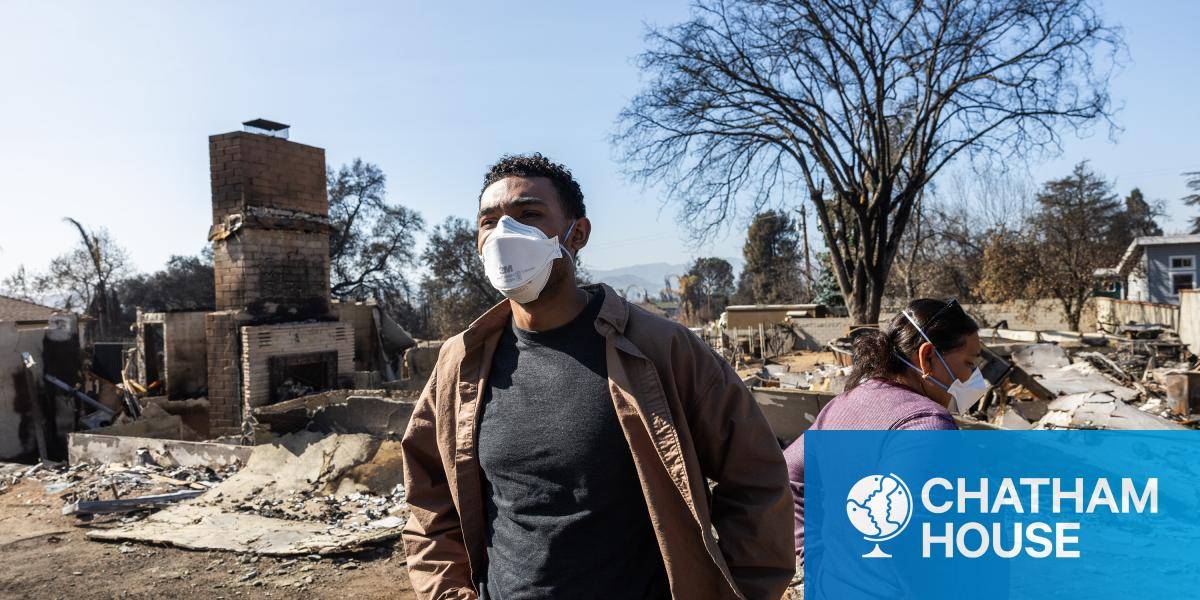
How the insurance industry can help society adapt to climate change Expert comment LToremark 1 October 2026 As climate change threatens to make homes uninsurable, the insurance industry is often the bearer of bad news. But its understanding of future risks can be used to help society adapt to a warming world. There are increasingly frequent headlines about how climate change is affecting insurance coverage and affordability: homeowners in areas prone to wildfires, hurricanes or flooding discovering that their existing policies cannot be renewed, or that cover has become unaffordable or vanished altogether. The word often attached to these stories is a stark one: uninsurability. Beyond the headlines, banks worry about what declining cover means for the value of properties securing long-term mortgages. In turn, regulators worry about the systemic consequences if large numbers of properties lose value at once. Mayors worry about gaps in coverage impacting long-term investment in their cities. Governments, meanwhile, are becoming more interventionist as people are being priced out of protection, stepping in to keep cover flowing. They are right to worry. But framing the problem as insurance failure misdiagnoses what is going wrong – and lets everyone else off the hook. Uninsurability is a symptom of deeper problems Want to hear more on the path to a secure energy transition? Join us at our climate and energy summit, where policymakers and industry leaders tackle the toughest questions on climate and energy security. The term uninsurability implies that the issue lies within the insurance industry. But it is almost always a symptom of deeper problems – of which climate change is the most important, but far from the only one. California is perhaps the most famous example of climate-driven market failure. While wildfire risk has undoubtedly risen, the retreat of insurance was as much a consequence of political choices to suppress premiums as of climate change. When the tru
Geopolitical Analysis
Chatham House Expert Comments //

Escaping the Hormuz trap: What should an agreement to reopen the Strait look like?

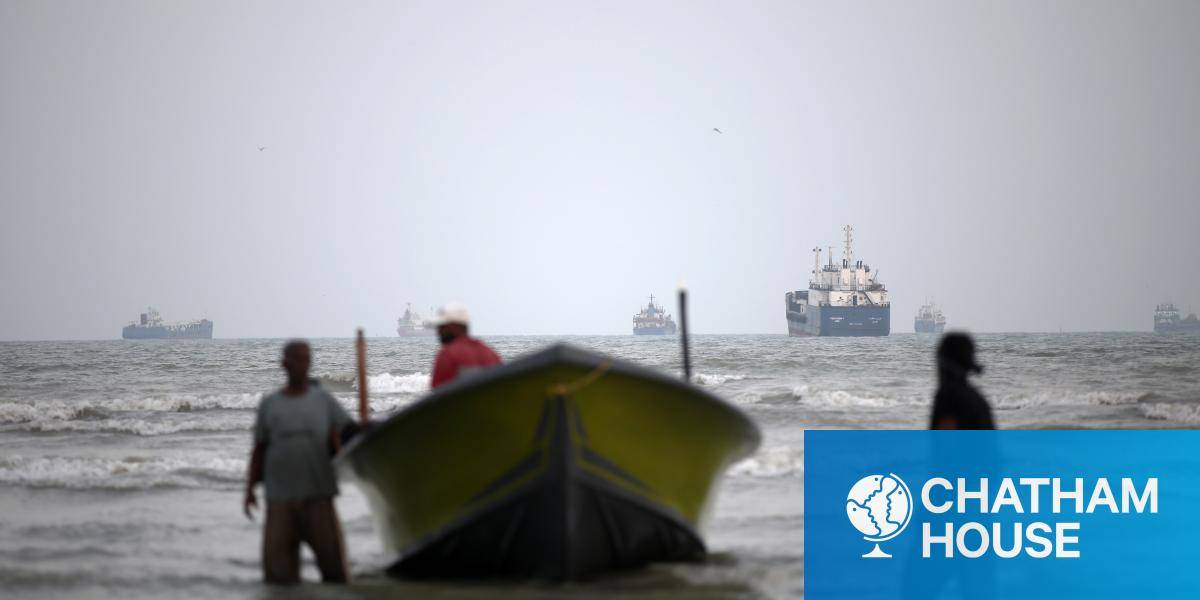
Escaping the Hormuz trap: What should an agreement to reopen the Strait look like? Expert comment jon.wallace 30 September 2026 A detailed, reciprocal, and verifiable process is essential to ensure that any agreement holds. The war between the United States and Iran has entered an uncertain phase between escalation and diplomacy. At the UN General Assembly, Iran offered a proposal to reopen the Strait of Hormuz and resume nuclear talks – if various conditions were met. That has apparently been rejected by President Donald Trump. Subsequent reports claimed the president was considering new strikes on Iran. Meanwhile, attacks on ships from the Iran-backed Houthis have extended the conflict into the Red Sea. Given the scope of disagreement between Washington and Tehran, and the global impact of the Strait’s prolonged closure, any settlement will likely need to begin with an unwinding of the Hormuz situation. Can that be achieved? It is possible. But a successful agreement on Hormuz requires above all a technically precise, reciprocal, and verifiable process that focuses on restoring freedom of navigation. It is unlikely to be effectively addressed through another vague Memorandum of Understanding (MOU), or as part of a wider grand bargain. Status of the Strait Tehran has enforced its declared ‘closure’ of the Strait of Hormuz by demanding that ships transit through Iranian waters, charging tolls, and striking vessels it claims have violated its policies. This has resulted in 85 maritime incidents and 24 seafarer deaths reported across the Gulf region. The US has responded by imposing a blockade on all ships linked to Iran. As of 28 September, US forces have redirected 122 commercial vessels, disabled three, and boarded two. US forces have also created their own route along the southern side of the Strait. The result is an unstable standoff and recurrent clashes. Meanwhile, hundreds of ships remain stranded in the Gulf. Shipping data shows only 16 vessels crossed the St

Geopolitical Analysis
Chatham House Expert Comments //

US midterms polls: Are Democrats winning or is Trump losing?

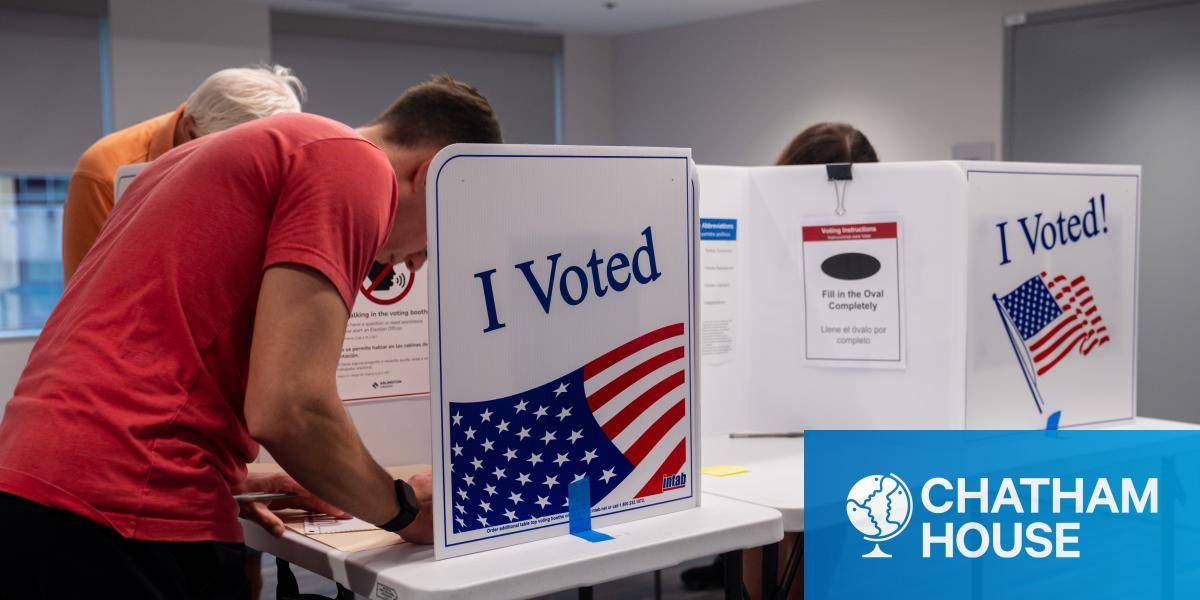
US midterms polls: Are Democrats winning or is Trump losing? Expert comment thilton.drupal 28 September 2026 Polls suggest Democrats will take control of the House of Representatives as American voters are dissatisfied with President Trump and his policies. Americans go to the polls on 3 November to elect a third of the US Senate and all the House of Representatives. The Republicans currently have majorities in both chambers of Congress. But their prospects of retaining this control look increasingly dire. The Republicans’ chances have been dragged down by President Donald Trump’s near-record low public approval rating and voter dissatisfaction with his handling of the Iran war and the economy, among other things. Democrats appear poised to take advantage, with most pundits suggesting they will retake control of at least the House of Representatives. But the race is not over yet. In the end, the key factor will likely be turnout, which is historically lower in midterms than presidential elections. Whichever party better mobilizes their voters to turn up on election day will ultimately determine the outcome. Democrats are strong favourites At this point, this election is the Democratic Party’s to lose. Republicans currently hold a narrow majority in the 435-seat House of Representatives. To control the House, which gives a party the ability to name chairmen of committees and set the legislative agenda, the Democrats will need to win at least 218 seats. They currently have 212 seats. Due to polarization and redistricting, most seats are highly unlikely to change party. Election analysts estimate that only around 21 House seats are close contests or ‘toss-ups’. Still, most pundits forecast Democrats winning between 220 and 230 seats overall – a relatively comfortable majority. Senate more challenging The Democrats face a more difficult challenge recapturing the Senate. Republicans now hold 53 of the 100 seats. Given that the vice-president can cast a tie-breaking vote

Geopolitical Analysis
Chatham House Expert Comments //

Brazil’s presidential election is more than just another polarized contest

Brazil’s presidential election is more than just another polarized contest Expert comment jon.wallace 28 September 2026 A Bolsonaro victory would mean Trump-aligned governments dominate South America. The first round of Brazil’s presidential election is scheduled for 4 October, with 13 candidates competing to occupy the Brazilian presidential palace, Planalto. For now, the contest is dominated by two men. Only a few percentage points (depending on the poll) separate 80-year-old President Luiz Inácio Lula da Silva of the Workers’ Party (PT) – running for his fourth term – and 45-year-old Flávio Bolsonaro of the right-wing Liberal Party (PL). Flávio is the son of the man Lula defeated in 2022, former president Jair Bolsonaro (2019–23), sometimes referred to as the ‘Trump of the tropics’. Lula squeaked out a narrow victory in the 2022 contest, of 50.9 to 49.1 percent in the second round, after public opinion surveys had seriously undercounted the support of his right-wing rival. Jair Bolsonaro is currently serving time for plotting a coup , after his supporters rioted in Brasilia in 2023 in an effort to overturn the 2022 results. This year’s contest is more than a familial grudge match. For one, it looks a lot like recent presidential elections in the region. In June, elections in both Peru and Colombia went to a second round. Each resulted in a narrow victory for conservative candidates who, like the Bolsonaros, are aligned with the regional diplomatic agenda of US President Donald Trump. Another tight contest now looms in Brazil, the most populous country and largest democracy in Latin America, the tenth largest economy in the world, and for decades an international champion of the Global South, through blocs like BRICS. Both Lula and the younger Bolsonaro face high levels of voter rejection. More than 54 per cent of Brazilian voters disapprove of Flavio according to one poll. Lula does little better in the same survey, with 52 per cent against the president running

Geopolitical Analysis
Chatham House Expert Comments //

New energy and trade routes could bypass Hormuz and change the Middle East. But major challenges remain

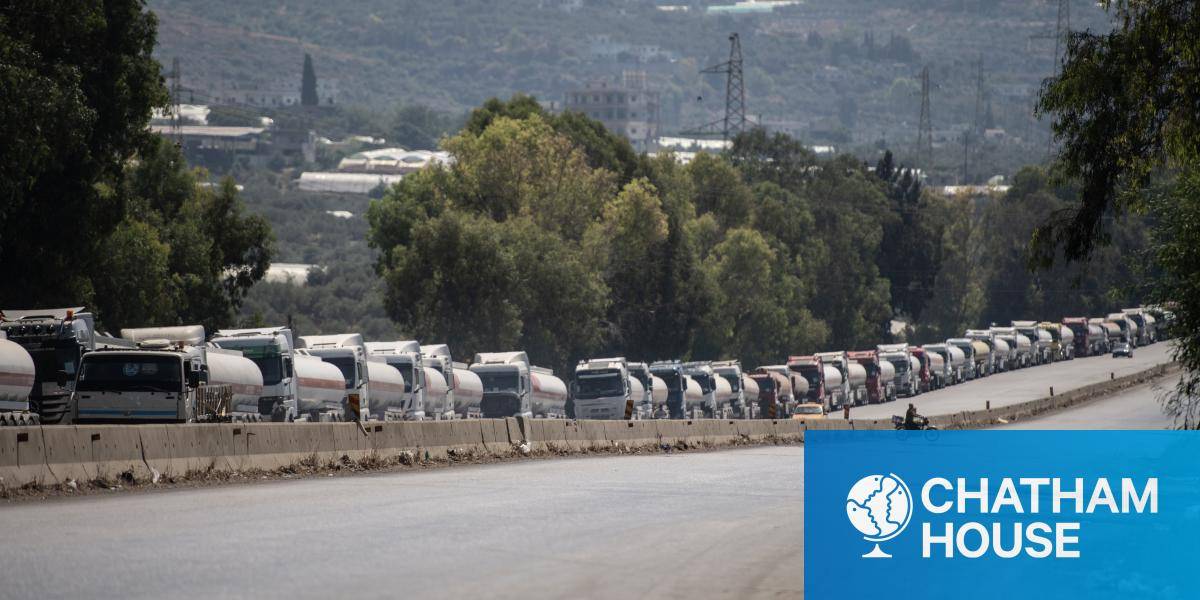
New energy and trade routes could bypass Hormuz and change the Middle East. But major challenges remain Expert comment thilton.drupal 25 September 2026 The Strait of Hormuz crisis is accelerating a wider reordering of the region, as Iraq, Syria and Lebanon plan new oil pipelines and transport corridors. But whether they can seize the opportunity to diversify will ultimately depend on wider reforms. The war on Iran and the resulting disruption to the Strait of Hormuz has exposed the vulnerability of existing trade and energy routes and unsettled the old balance of power across the Middle East. In this context, Iraq, Syria and Lebanon are seeking to capitalize on their position between Europe and the Gulf and improve their connectivity via oil and gas pipelines, roads, railways and digital corridors. Once central to an Iranian regional order, all three governments are now aiming to achieve greater sovereignty by diversifying their economic ties, a shift supported by the Trump administration. Yet they are attempting to do so while facing foreign occupations and military action, and while also confronting domestic endemic corruption and fragmented political systems that empower armed groups. Whether they can seize this opportunity to become more connected – and more sovereign – will therefore depend not only on the infrastructure they build, but on whether they can reform their states to govern it. Changing energy routes The effective closure of the Strait of Hormuz has caused severe disruption to regional energy flows, including from Iraq. Pre-war, Iraq was exporting around 3.3 million b/d from its southern oilfields. By the second week of March, exports from southern Iraq had collapsed. Southern exports gradually recovered from mid-April, reaching 2.3 million b/d in August, aided by Iraq giving discounts for buyers and by Iran reportedly giving permission for Iraqi oil tankers to pass through the Strait. Syria and Lebanon have been less directly impacted by Hormuz, gi

Geopolitical Analysis