Public source stream

Aggregates

The newsroom’s collected links, newest first. Read-only and unreviewed; stories saved by the desk appear in EchoNews.
10 shown // 378 collected items // Newest first Back to newest
Chatham House Expert Comments //

Meeting Arctic security threats: Do Europe’s new strategies make sense?

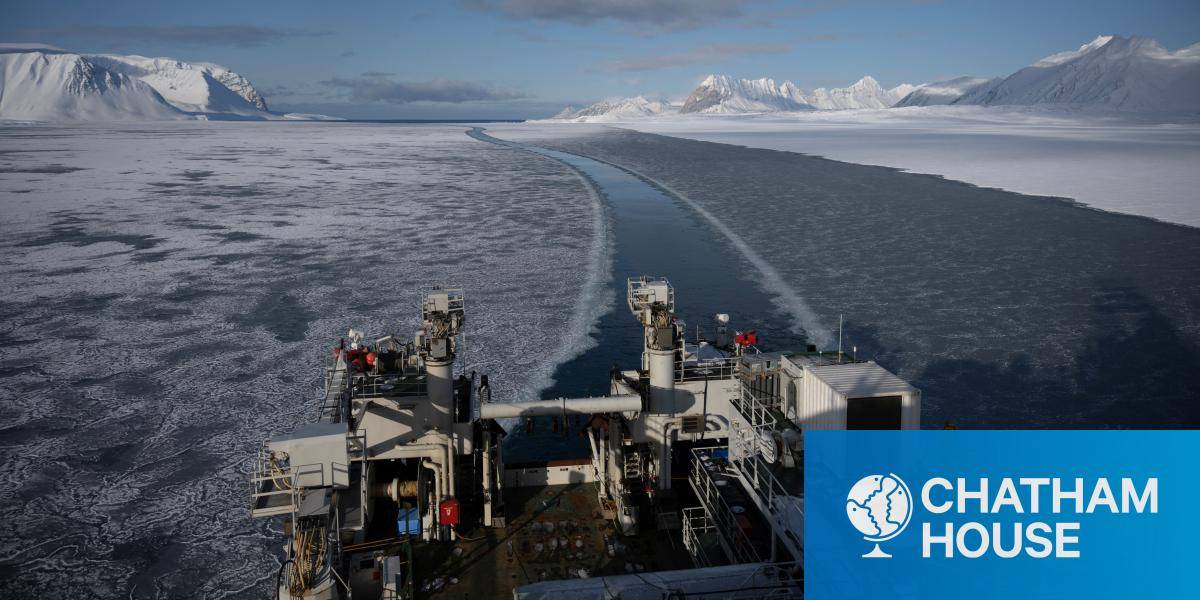
Meeting Arctic security threats: Do Europe’s new strategies make sense? Expert comment jon.wallace 22 October 2026 Responding to security threats from Russian military capabilities and increasing Chinese activity are largely sensible. But a lack of alignment on climate policy risk undermining the security they seek to strengthen. September’s security agreement between the United States, Greenland and Denmark has, for the time being, lowered the political temperature in the High North following months of tension over US ambitions towards Greenland. But the Arctic is being reshaped by multiple converging factors. Accelerating climate change and ecosystem degradation are intersecting with geopolitical tensions, military activity, and competition for resources to make the region increasingly important. Arctic sea lanes, long considered unviable, are drawing interest following disruption in the Strait of Hormuz and Red Sea – though they are still not reliably ice-free. In response, the UK published its updated Arctic Policy Framework on 15 October, swiftly followed by the EU’s own updated strategy for the Arctic ‘Europe’s Northern Neighbourhood’ on 20 October. Both documents make important moves on enhancing military preparedness in the region. But alongside strategies for securing an Arctic that is melting, greater efforts are needed to keep it frozen. From ‘low tensions’ to hard security There are differences between the UK and EU strategies: The UK’s framework declares that the ‘High North, Low Tension’ policy followed by Arctic countries for 30 years is effectively over and adopts a NATO-first approach, based on deterrence and warfighting readiness. The EU’s strategy prioritizes maritime surveillance, military mobility and protection of subsea infrastructure, creating ‘ dual-use and multi-purpose capabilities ’ – placing the Arctic into the broader agenda of EU ‘Strategic Autonomy’. Related work Denmark’s Greenland deal with Trump is a victory for diplomacy over bull
Geopolitical Analysis
Chatham House Expert Comments //

US voters are angry. But on tariffs and war, the midterms won’t bring quick change

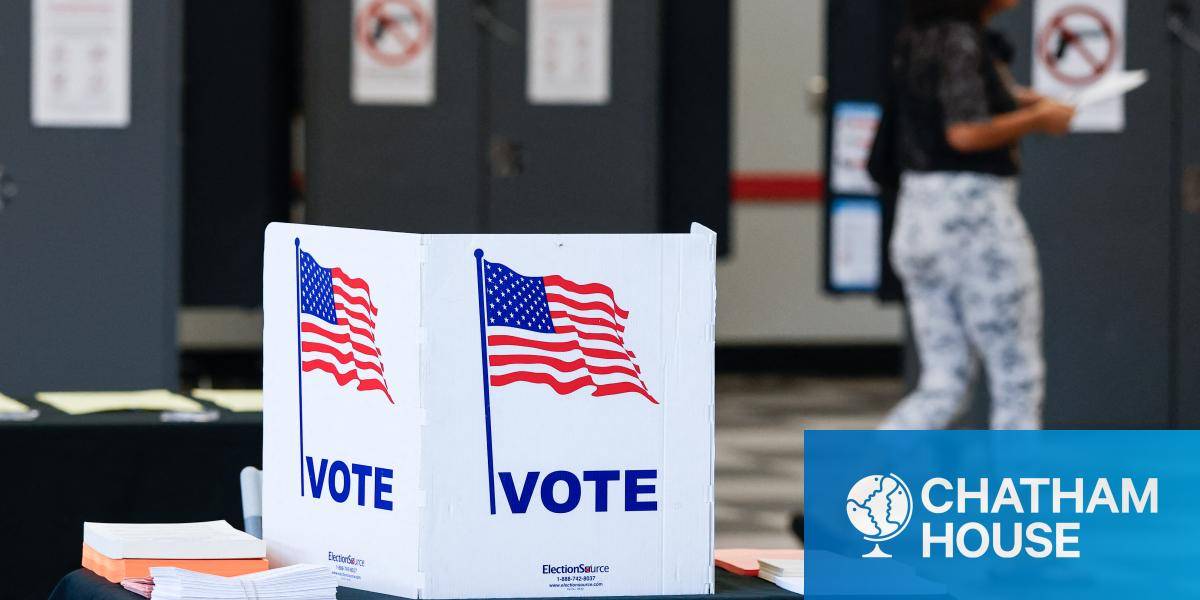
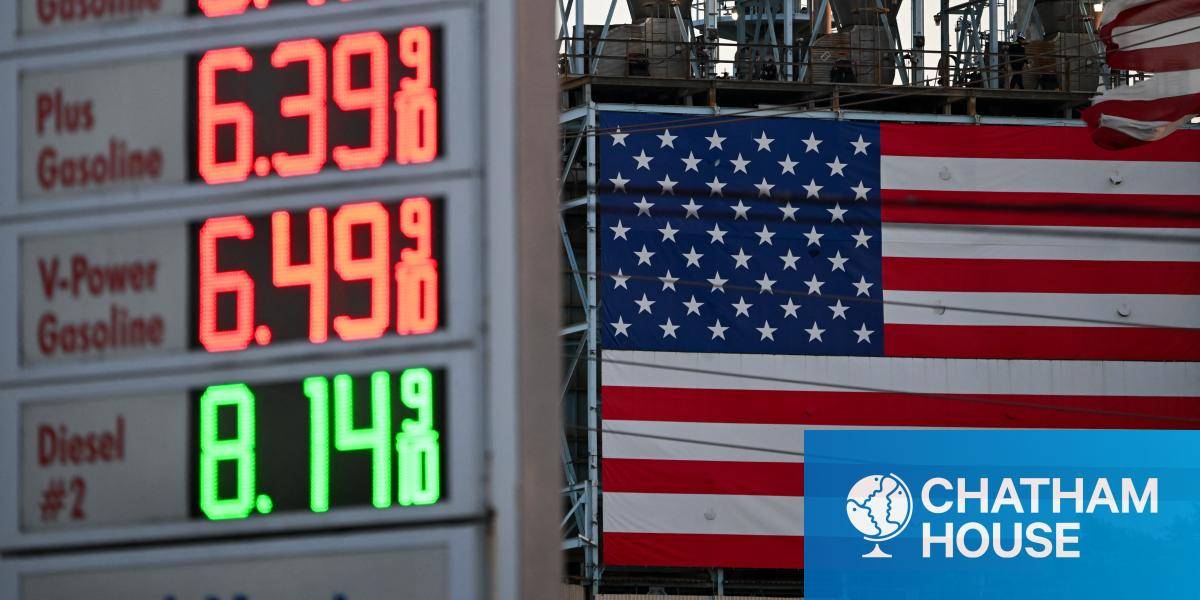
US voters are angry. But on tariffs and war, the midterms won’t bring quick change Expert comment LToremark 22 October 2026 Despite their anger, American voters are unlikely to see much immediate change to the international policies that are driving up costs at home: tariffs and the Iran war. As the US midterms approach, American voters are angry. They are angry about the economy, about prices and about insecurity. And they have connected their plight at home with the Trump administration’s international policies. Public opinion directly connects tariffs to high prices. An August survey found that 75 per cent of Americans worry about being able to afford groceries and goods, while 83 per cent of those worried say tariffs have increased the prices of those goods. And as many as three in four voters say tariffs will influence their vote. Voters are also angry about the Iran war, which they directly connect to the cost of living . Majorities say that even if Trump ended the war before the midterms, they would not view his party more favourably. Related work Why the US midterms are a rare foreign policy election The last time midterm voters were this angry about international issues was in 2006, as the Iraq war turned sour. But after that election, then-president George W Bush adopted even more aggressive policies in Iraq, the so-called ‘surge’ of 2007. Trump’s public statements suggest that he, too, is likely to be more aggressive on both war and tariffs. His political style explains some of this, but so does the extent to which the executive branch holds power over international policies. Democrats have said if they win one or both houses of Congress they will initiate investigations into corruption and the rule of law. But efforts to claw back power will be slow – and even slower to yield results in voters’ wallets. Changing course on Iran? On the war with Iran , all the factors that have prevented a deal before the midterm elections will still be in place after 3 No

Geopolitical Analysis
Chatham House Expert Comments //

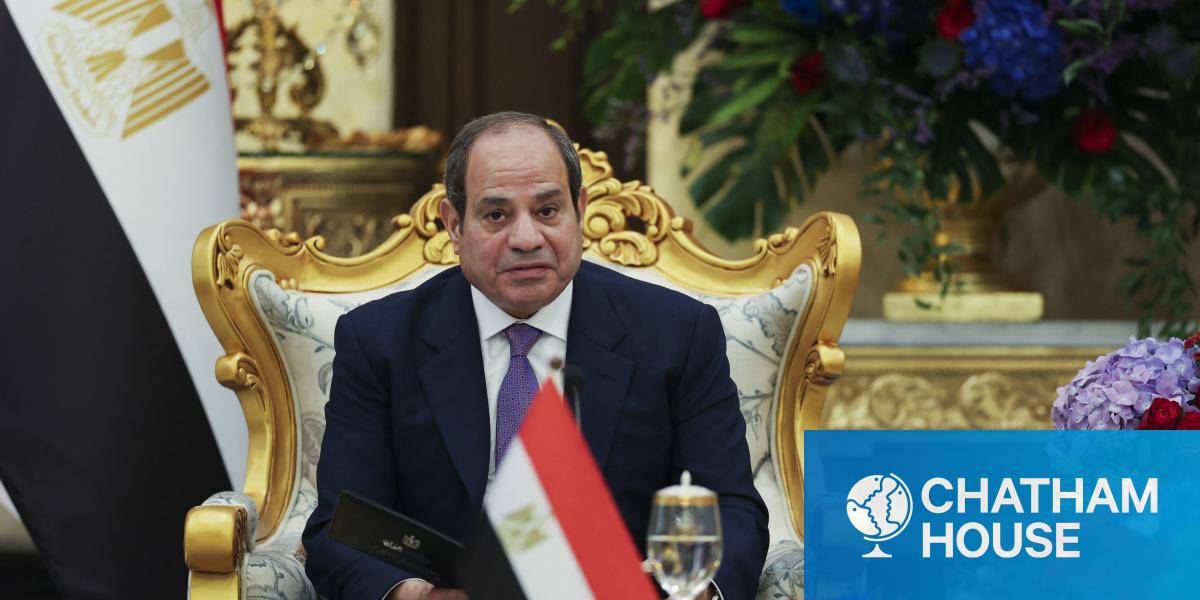
Why has Egypt’s President Sisi said he will step down in 2030?

Why has Egypt’s President Sisi said he will step down in 2030? Expert comment thilton.drupal 22 October 2026 Egyptian president’s surprise announcement comes amid deep economic difficulties and includes a plan for a military-approved succession. Egypt’s President Abdel-Fattah el-Sisi has declared he will step down at the end of his third term in 2030. Speaking during the Egyptian Military Academy graduation on 17 October, he also outlined a military-centric succession process to select the next president and senior officials beyond 2030. The statement surprised many observers, and perhaps even state officials. If Sisi follows through on his pledge and leaves peacefully, he’d be the first Egyptian president to leave office without dying, being imprisoned or facing a popular uprising. The unprecedented decision will have significant implications for Egypt’s political landscape, the balance of power within the regime and the military’s influence over politics and governance. Why is Sisi leaving? Sisi became president in 2014, after the overthrow of Mohamed Morsi’s short-lived Muslim Brotherhood government. He is currently serving his third term, after winning elections seen as predetermined in 2018 and 2023. A constitutional referendum in 2019, also seen as predetermined, increased the president’s term from four to six years, extending Sisi’s current term to 2030. Sisi, who is 71, did not give an exact reason for why he would step down in his speech at the military academy. He said that there would be no further amendments to Egypt’s constitution to prolong his rule and declared it ‘a matter that has been completely settled and will not be discussed,’ suggesting a transition of power is inevitable. Economic troubles Two factors likely lie behind this surprise decision. First, the debt-financed economic model pursued under Sisi is unsustainable. This system has sustained military dominance and stalled urgent economic reform. The government’s vast borrowing to fund mega

Geopolitical Analysis
Chatham House Expert Comments //

Will the US midterms change Washington’s policy on Israel and Palestine?

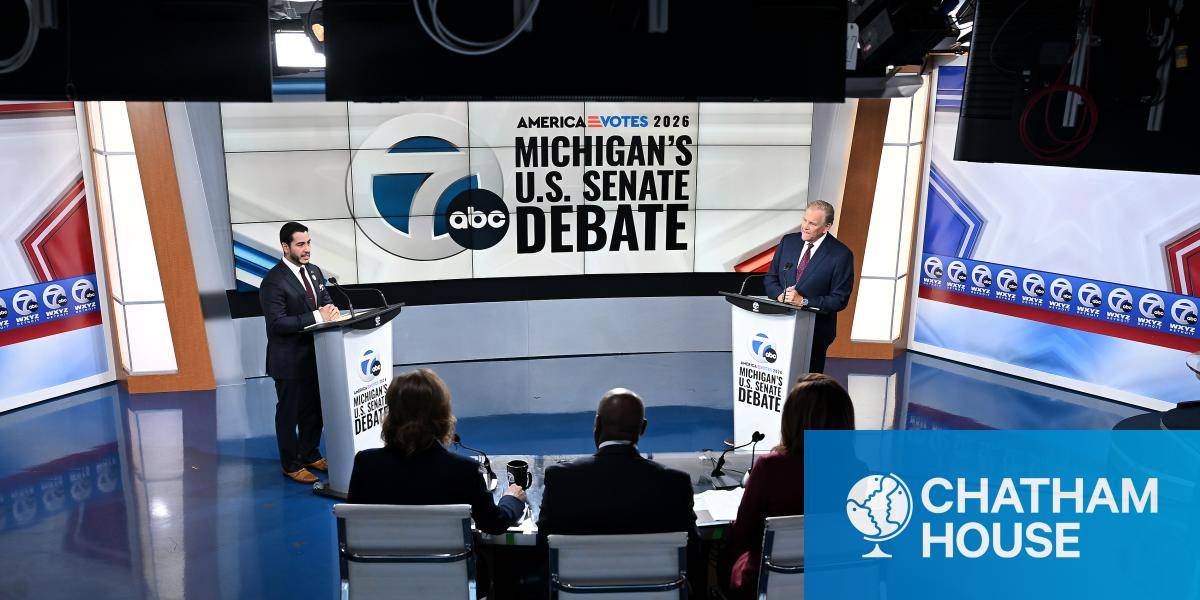
Will the US midterms change Washington’s policy on Israel and Palestine? Expert comment jon.wallace 22 October 2026 Not immediately. But a Democratic victory could set the terms for a new approach by the next president. Whatever the results, November’s midterm elections will not immediately transform US policy toward Israel and Palestine. In any outcome, the separation of powers means that President Donald Trump will still control American foreign policy. Even a Democrat-controlled Congress could not compel his administration to pursue a fundamentally different approach. But the midterms may accelerate a transformation that is already underway in the Democratic Party and among the US electorate, where the political centre of gravity on Israel and Palestine is shifting rapidly. If Democrats win a majority in either or both houses, they will gain new congressional tools to act on Israel–Palestine issues. Most importantly, the legislation they put forward would establish the policy baseline from which a future Democratic administration would govern. The shift Among dozens of others, Democrats like Abdul El-Sayed, running for the US Senate in Michigan, and Angela Gonzales-Torres, running in the general against another Democrat in California, have drawn considerable attention for their criticism of Israeli government actions – and US support for them. The race in Michigan, which could be decisive for Democratic hopes to retake the senate, looks tight . But even if progressive candidates don’t do as well as expected in these elections, a shift is underway. Developments in Washington over just the past month illustrate how much has already changed. On 29 September, 46 of 47 Senate Democrats voted for a resolution led by Senators Chris Van Hollen, Tim Kaine and Bernie Sanders. This would ‘require the Department of State to provide information and assessments related to investigations of the killing of United States citizens by violent Israeli settlers or Israeli security fo

Geopolitical Analysis
Chatham House Expert Comments //

France’s riots and mounting debt reveal a country in disarray ahead of pivotal presidential election

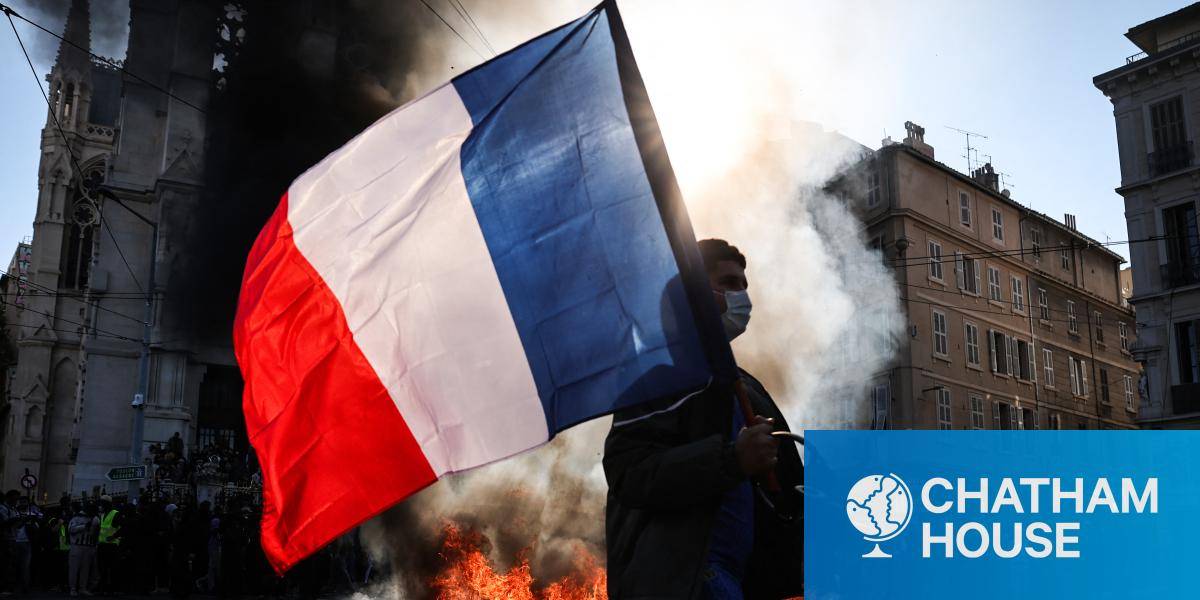
France’s riots and mounting debt reveal a country in disarray ahead of pivotal presidential election Expert comment LToremark 21 October 2026 France’s violent protests put further pressure on Macron’s already weak government, give Marine Le Pen fresh political ammunition – and offer a stark warning for Europe. Only three weeks after the peaceful celebration of Pope Leo XIV’s visit, France offered an altogether different spectacle over the weekend: burning cars, looted shops, violent clashes with police and the historic town hall of Limoges engulfed in flames. The contrast between the two events is stark. But they may both point to something deeper: a profoundly divided society, facing a crisis of self-confidence, hoping to recover a sense of direction and purpose. Beneath France’s political anger lies an anxiety about the future, in a world increasingly shaped by algorithms and faceless technology. Although this anxiety is not unique to the country, the timing is particularly bad for France. A hijacked social protest It all started with high-school students protesting deteriorating teaching conditions and staff shortages. University students soon joined them, followed by trade unions and veterans of the ‘yellow vests’ movement, as grievances expanded to encompass living costs and declining public services. By 17 October, some 550,000 people had demonstrated, according to the ministry of the interior; organizers claimed 800,000. In any case, it was one of the largest mobilizations since protests against the government’s pension reform bill in 2023, which has since been dropped. Most participants protested peacefully, although some young demonstrators were severely injured in clashes with police. Their demands were also quickly overshadowed by rioters who looted shops, attacked police officers and set public buildings alight. The French government imposed a curfew in the most sensitive districts of Paris and other major cities, bracing for further escalation this comi

Geopolitical Analysis
Chatham House Expert Comments //

Can the UK drive middle power coordination on AI?

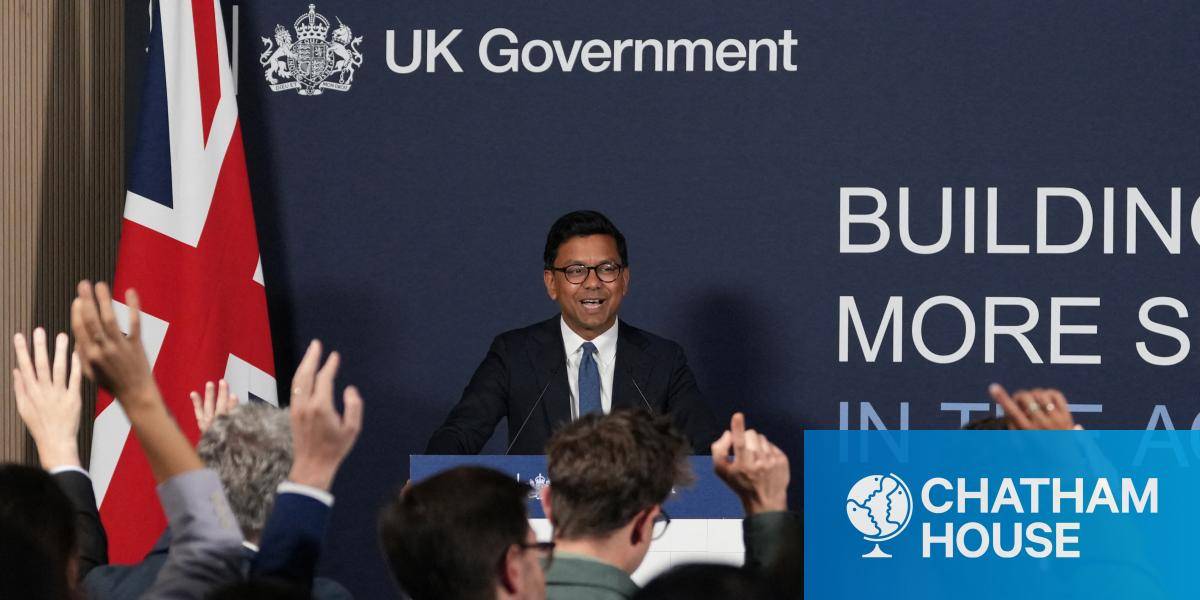
Can the UK drive middle power coordination on AI? Expert comment thilton.drupal 20 October 2026 Other middle powers are increasingly realizing the need for cooperation. The UK should help advance it. Last week, UK AI Minister Kanishka Narayan announced the government would take steps to boost Britain’s resilience to AI-driven risks. New measures will include advancing the government’s cyber defence and considering how to use legislation to mandate serious AI incident reporting. In the face of US and Chinese dominance and growing global concerns about an AI crisis, the UK is one of many countries seeking to build agency and security over AI. Last week at Chatham House, Canada’s AI Minister Evan Solomon outlined his country’s vision for secure, democratic technology and called for coalitions among likeminded countries to build and govern it. Solomon’s speech came after a group of 20 countries and the EU also issued a joint statement calling for measures to control frontier AI models. Led by Norway and Finland, the signatories are all, arguably, ‘middle powers.’ They include democracies like Australia and Canada and non-democracies like Singapore and the United Arab Emirates. The UK was noticeably absent from this joint statement. But UK prime minister Andy Burnham did use his UN General Assembly address to commit UK leadership to a global agreement on AI. And AI will be front-and-centre of the UK G20 presidency next year. The joint statement is just a call to action. Yet it may be a promising indication that middle powers are creating the tools and networks they need to coordinate on safe, secure AI. The UK can strengthen its middle power status on AI through driving coordination while also carving out a leading role on AI security. Welcome to the club Coordination between middle powers first requires defining them. The challenge is that who counts as a middle power is contested. One argument would be that ‘AI middle powers’ is simply a term for everyone except Washin

Geopolitical Analysis
Chatham House Expert Comments //

Foreign rivalries risk turning Somalia’s political crisis into a protracted war

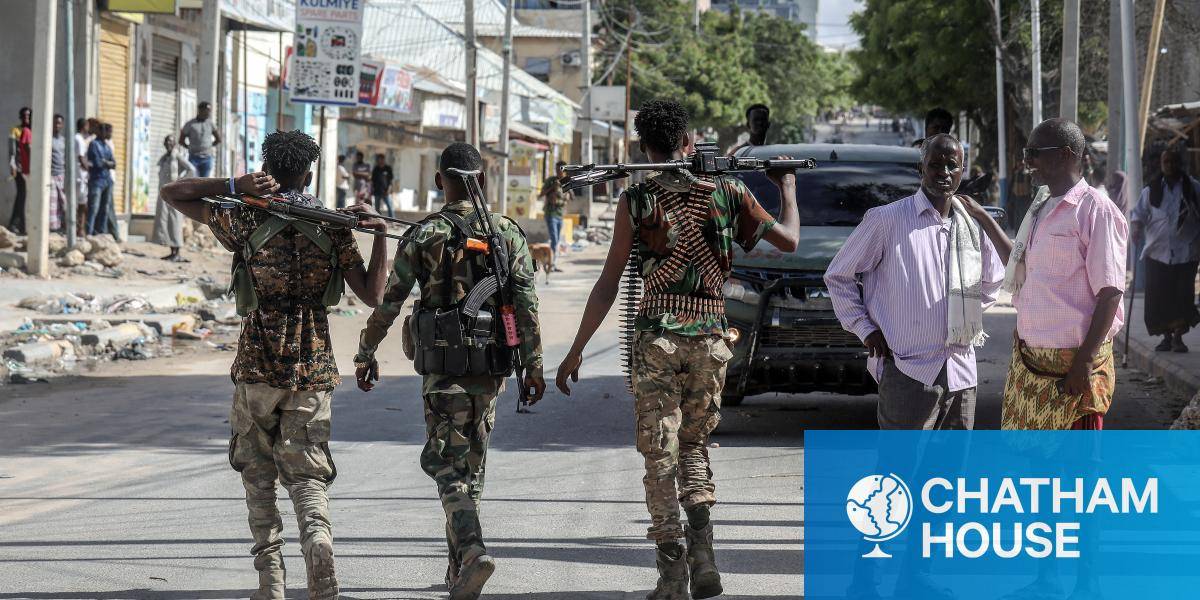
Foreign rivalries risk turning Somalia’s political crisis into a protracted war Expert comment thilton.drupal 15 October 2026 Somalia’s domestic instability is being compounded by sharpened regional rivalries, paving the way for a more entrenched conflict as seen elsewhere in the Horn of Africa. Somalia has been embroiled in a political crisis since May 2026, when the term of President Hassan Sheikh Mohamud was originally due to expire. Parliament passed constitutional amendments in March that extended presidential terms to five years, keeping President Hassan Sheikh in office until May 2027. This was disputed by Somalia’s opposition alliance, a coalition of political figures including the leadership of the federal member states of Puntland in the north and Jubaland in the south, as well as the former president of South West State, Abdiaziz Laftagareen. This week, the opposition also rejected the electoral commission’s unilateral announcement that parliamentary and presidential polls would take place in April and May 2027. The political crisis has sparked fierce clashes in Mogadishu and the city of Baidoa in South West State. The recent fighting around Baidoa, between government forces and opposition-allied fighters loyal to Laftagreen, reportedly involved thousands of fighters and the use of drones and fighter jets. The federal government, along with its allied federal member state administrations – South West, Hirshabelle, and Galmudug – controls most major cities in southern and central Somalia, while Jubaland, in the far south, is at odds with Mogadishu. Al-Shabaab, an al-Qaeda-affiliated organization, controls much of the surrounding countryside. Meanwhile, the administrations of Puntland and the self-declared Republic of Somaliland govern much of the north, with the newly created and federal government-aligned North East State squeezed in-between. High stakes amid regional tensions This is not Somalia’s first experience of constitutional disputes leading to ar

Geopolitical Analysis
Chatham House Expert Comments //

Why the US midterms are a rare foreign policy election

Why the US midterms are a rare foreign policy election Expert comment LToremark 15 October 2026 US voters are linking economic concerns to the Trump administration’s foreign policy choices. This is bad news for Republicans. Foreign policy rarely decides US elections. Conventional wisdom is that voters know little, and care less, about international affairs. Instead, they are driven by pocketbook issues, like the price of gas and groceries. As James Carville, an adviser to Bill Clinton, once observed : ‘it’s the economy, stupid’. But this year, the economy is foreign policy. There are two important exceptions to the rule that US voters don’t care about foreign policy – and they both apply this year. One, voters care about foreign affairs when an administration’s choices directly affect their daily lives. Two, voters care about what foreign policy choices reveal about a president’s competence as commander-in-chief. The upcoming midterms could therefore be a rare foreign policy election – of a kind not seen since 2006 when a backlash to George W. Bush’s handling of the Iraq war handed Republicans a ‘thumping’ defeat. With voters now feeling the pain of yet another war in the Middle East and Trump’s tariffs, history could repeat itself. The president seems aware of this risk, sending mixed signals about whether the elections will shape his handling of the war in Iran and striking a deal on diesel exports with Russia to ease the pain at the pump for voters. But perhaps the bigger question is what Trump does after the midterms, the last major electoral check on his presidency. War on the ballot Become a corporate member Give your organization access to trusted geopolitical analysis, policy insight and expert networks to help leaders anticipate risk, navigate uncertainty and make informed decisions. War has always been the clearest example of when foreign policy directly affects the daily lives of voters. But this is not always reflected in polls about the importance of in

Geopolitical Analysis
Chatham House Expert Comments //

Responding to US sanctions on the International Criminal Court

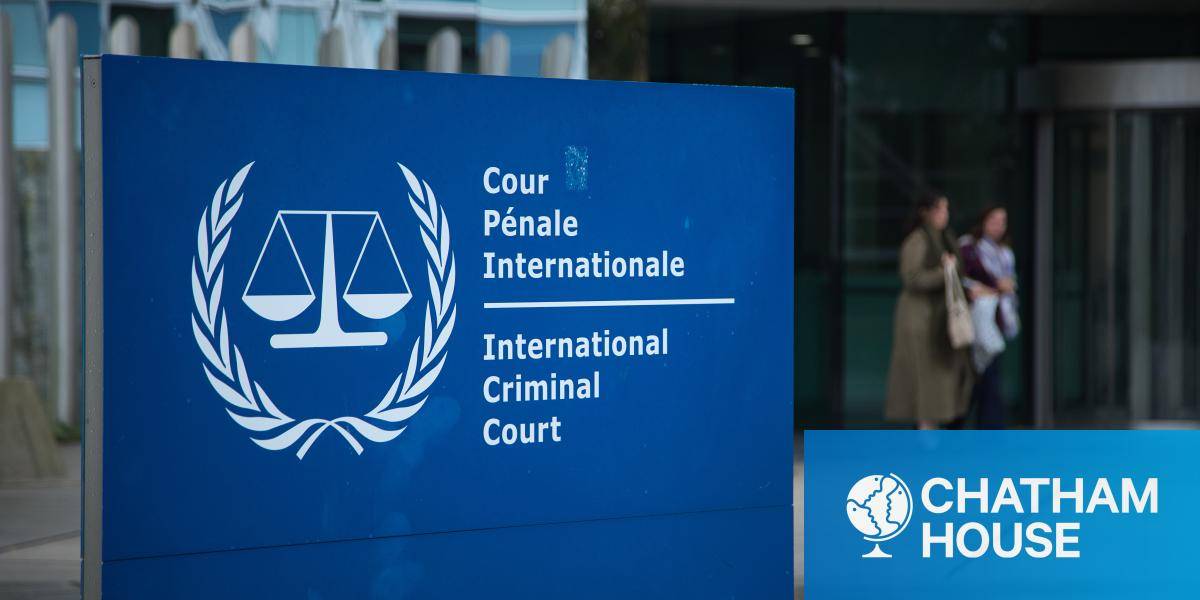
Responding to US sanctions on the International Criminal Court Expert comment sfarrell.drupa… 15 October 2026 The US decision to extend sanctions has upped the ante in its campaign against the ICC. The Court’s supporters must decide how to respond, perhaps now it is time to put all options on the table. On 9 October 2026, the US designated the International Criminal Court under Executive Order 14203, extending its existing sanctions package on individual ICC officials to the entity itself as a whole. The US imposed asset freezes on any property owned by the Court and prohibited all transactions by US individuals or entities involving the ICC. The US has allowed certain limited exceptions to this general prohibition, to allow for the ongoing detention of some awaiting trial, the payment of pensions, the use of IT software and social media and a 180-day ‘wind down’, allowing certain otherwise prohibited transactions until April 2027. These sanctions were introduced by the US in what Secretary of State Marco Rubio called an ongoing campaign to ‘dismantle the ICC brick by brick’. ‘For decades, Republicans and Democrats alike rejected the idea that the International Criminal Court had the power to prosecute American citizens, military service members, or political leaders. America never joined the court. We don’t need it. And we don’t want it,’ Rubio said in a statement. ‘We expect our allies, many of whom are part of the ICC and that rely on American service members for their defense, to rein in the court. If they do not, the United States will continue its campaign to dismantle the ICC, brick by brick, until Americans are threatened no longer,’ he added. The ICC called the sanctions ‘an attempt to obstruct the course of justice and to prevent the Court from doing what it was created to do. It is an assault on the rule of law and on the very foundations of the international legal order which strikes at the simple principle that no one stands above the law.’ Those countr

Geopolitical Analysis