Public source stream

Aggregates

The newsroom’s collected links, newest first. Read-only and unreviewed; stories saved by the desk appear in EchoNews.
10 shown // 378 collected items // Newest first Back to newest
Chatham House What's New //

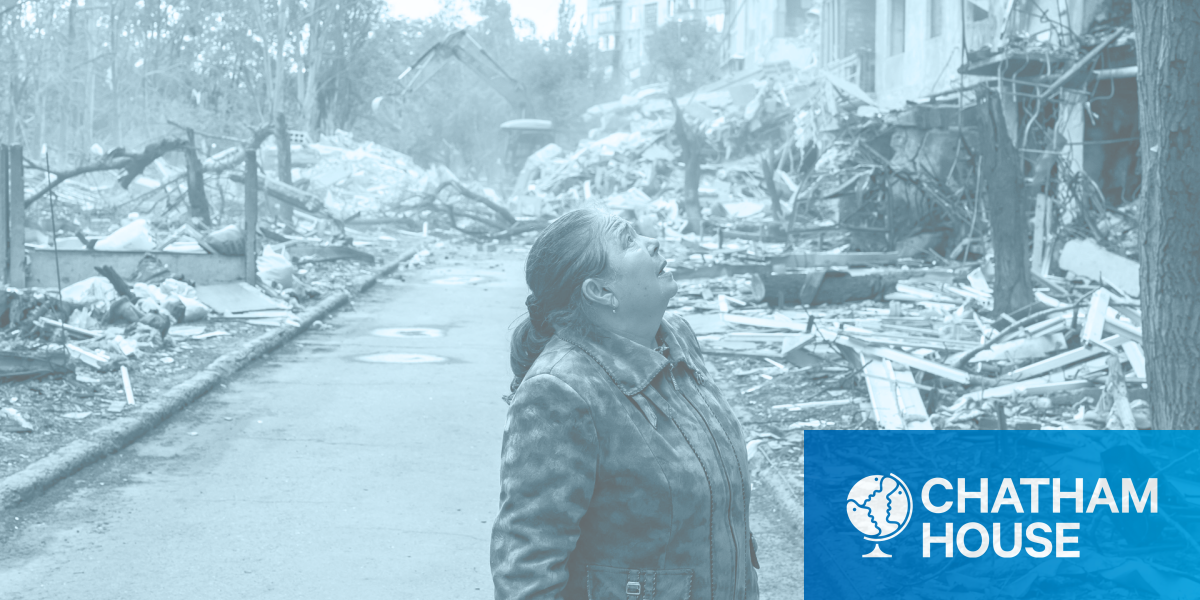
Russia-Ukraine war: Who will break first?

Russia-Ukraine war: Who will break first? 3 November 2026 — 12:00 TO 13:00 GMT Anonymous (not verified) 29 October 2026 Chatham House and Online Hear from Arseniy Yatsenyuk, former prime minister of Ukraine, as he discusses mounting military and economic pressures on both sides, and how Kyiv can sustain the defence of its sovereignty. Hear from Arsenyi Yatsenyuk, former Prime Minister of Ukraine as he discusses mounting military and economic pressures on both sides, and how can Kyiv sustain defence of its sovereignty. The Russia–Ukraine war is placing mounting pressure on both countries as battlefield attrition combines with growing economic strain. Russian aerial attacks continue to test Ukraine’s infrastructure and economy, while Moscow faces its own financial pressures and Ukrainian attacks on oil refineries and military industry. The question is whether either side can sustain the fight or whether these pressures could change the war’s trajectory. This event discusses How is the character of the Russia–Ukraine war changing? How are Russian aerial attacks affecting Ukraine’s economy and population? How could changes to US sanctions affect Russia’s calculations? What resources does Russia have to continue the war, and who is enabling it externally? How can Ukraine meet its growing funding requirements? What pressures on the Kremlin could shift the course of the war?
Geopolitical Analysis
War on the Rocks //

A Tale of Two Markets: A Dickensian Take on the Coming Years in Defense Tech

It’s a strange time for the defense technology sector. Despite the headlines of record capital, valuations, and defense budgets, there is a growing unease among investors and leadership teams. Production contracts remain as elusive as ever, and a generation of startups is struggling to extend their runways across the valley of death, risking not just those businesses but capital flight from the broader sector. There is little point in trying to decide which one of these diverging narratives is real, or if a defense technology market collapse is imminent. To understand what’s really happening, we should recognize that things are The post A Tale of Two Markets: A Dickensian Take on the Coming Years in Defense Tech appeared first on War on the Rocks .

Geopolitical Analysis
War on the Rocks //

Sitting Ducks or Strategic Shields: What Does the Small Reactor Promise Mean for Future Conflicts?

Amid the rapid expansion of AI and data centers alongside growing climate commitments as the demand for clean energy rises, nuclear power is increasingly viewed as a reliable source to fill the gaps and complement the stochastic output of solar and hydropower. This renewed interest is also driven in part by countries’ pursuit of greater energy self-reliance, even as energy and nuclear infrastructure continue to become consequential targets in armed conflict — to disrupt electricity supplies, undermine military capabilities, and pursue counterproliferation objectives. Small modular reactors have since re-emerged almost as a public relations vehicle for the nuclear industry with The post Sitting Ducks or Strategic Shields: What Does the Small Reactor Promise Mean for Future Conflicts? appeared first on War on the Rocks .

Geopolitical Analysis
Chatham House What's New //

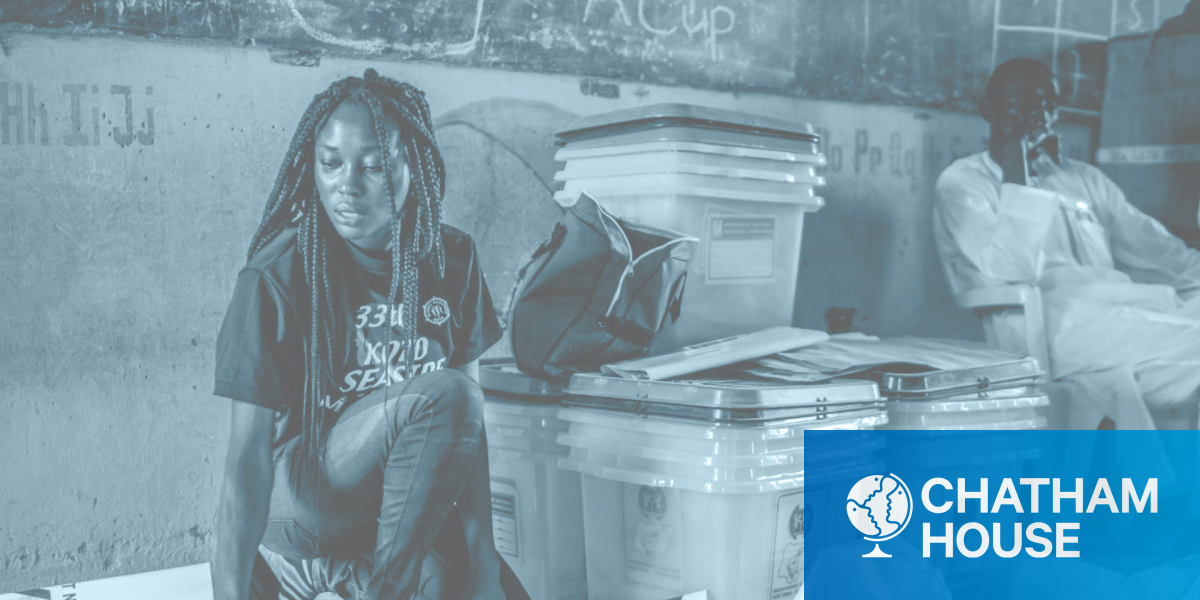
Nigeria’s 2027 elections: Democratic trajectory and regional stability beyond the ballot

Nigeria’s 2027 elections: Democratic trajectory and regional stability beyond the ballot 12 November 2026 — 14:00 TO 15:30 GMT Anonymous (not verified) 28 October 2026 Chatham House and Online This panel discussion, held in partnership with Kimpact Development Initiative, assesses what Nigeria’s 2027 presidential elections may mean for the country’s democratic trajectory, regional stability and international partnerships. Join us as experts discuss what Nigeria’s 2027 presidential elections may mean for the country’s democratic trajectory, regional stability and international partnerships. In the run up to Nigeria’s 2027 general elections, the country’s economic and security trajectory has taken on added significance, shaping not only the domestic political contest but Nigeria’s standing as a regional anchor and international partner. President Tinubu’s removal of fuel subsidies, the floating of the naira, an ambitious tax overhaul and a historic expansion of the armed forces have each carried consequences well beyond Nigeria’s borders. These policy shifts have had significant influence on investor confidence in one of Africa’s largest economies, its capacity to project stability across West Africa, and the terms of its security and economic partnerships with the UK, US and other international partners. The stakes are heightened by a fraying regional order. ECOWAS has been left fractured by Sahelian exits; cross-border insecurity along Nigeria’s porous frontiers continues to fuel migration pressures; and investors are weighing improving macroeconomic indicators against persistent poverty, inequality and a still-volatile security environment. This event discusses: What could this election mean for Nigeria’s democratic trajectory? How will Nigeria’s management of the elections and election outcomes impact international investors’ willingness to remain engaged in Nigeria? How will Nigeria’s 2027 election impact regional stability, migration and security cooperation? Wh

Geopolitical Analysis
Chatham House What's New //

Africa Aware: 10 years of Cameroon’s Anglophone Crisis

Africa Aware: 10 years of Cameroon’s Anglophone Crisis Audio thilton.drupal 28 October 2026 Guests discuss the evolution of anglophone Cameroonians’ grievances in the past decade, the internal and international political dynamics underpinning the lack of resolution to the crisis, and international mediation efforts and pathways for durable peace. What began in October 2016 as a protest movement, in which anglophone Cameroonians voiced their exasperation at feeling marginalized within a francophone-dominated political system, has become an entrenched conflict trapping millions of civilians. Marked by guerrilla warfare, a heavy humanitarian toll and political stalemate, the crisis has drawn a muted international response. A series of mediation attempts and a national dialogue have yielded limited results, and multilateral solutions remain absent. In this episode, guests Dr Jacqui Cho and Hubert Kinkoh join the Africa Programme’s Romane Dideberg and Lisa Musumba to discuss the evolution of anglophone Cameroonians’ grievances in the past decade, the conflict economy and separatist movement fragmentation. They also discuss the internal political dynamics at the heart of the conflict, as well as international mediation efforts and pathways for durable peace. About Africa Aware Africa Aware is a podcast from the Chatham House Africa Programme bringing together leading international experts to provide in-depth analysis and sharp insights on the political, economic and social issues shaping African countries, their international relations and the continent as a whole. You can also listen to Africa Aware on Apple Podcasts and Spotify. Listen to the recent Independent Thinking podcast episode on Africa’s global influence here: Can Africa maximize its global influence?

Geopolitical Analysis
Chatham House Expert Comments //

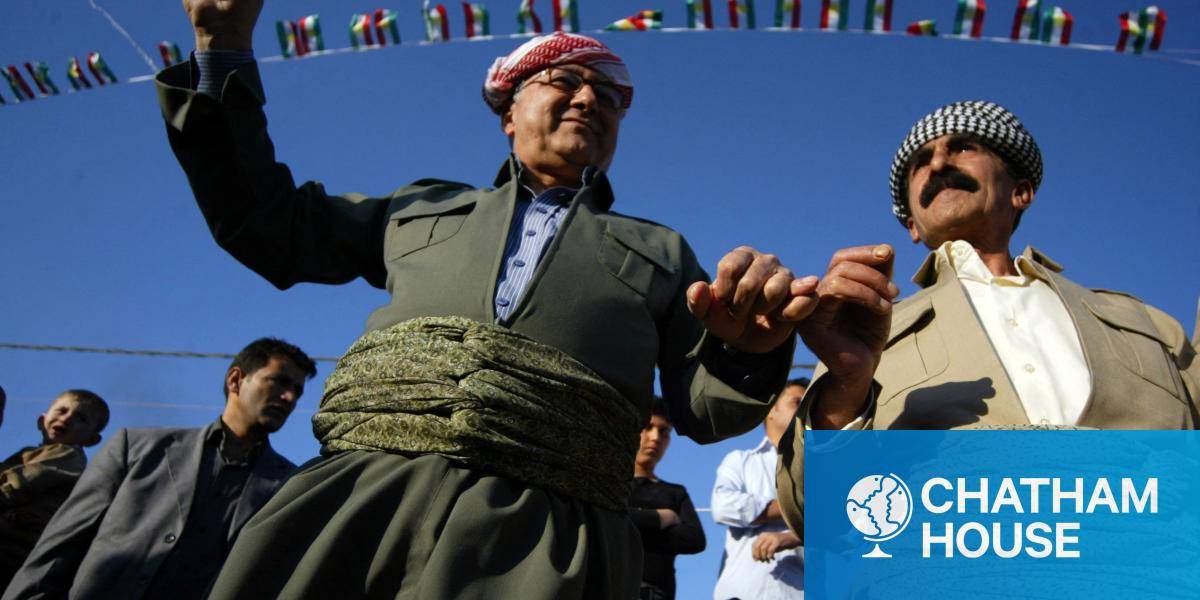
Division between Iraq’s Kurdish parties risks undermining Kurdistan region’s autonomy

Division between Iraq’s Kurdish parties risks undermining Kurdistan region’s autonomy Expert comment jon.wallace 28 October 2026 The KDP and PUK largely agree on Kurdish issues in Turkey, Iran and Syria. But division on how to govern at home could invite outside interference and undermine hard-won self-governance. Two years after Iraq’s Kurdistan Region went to the polls to elect a new government, the KDP and the PUK – the region’s two largest parties – have still failed to reach an agreement to form the new government. A caretaker government, originally elected in September 2018, remains in charge. This situation is taking the Kurdistan Region down a path of profound and possibly permanent division. Its longstanding partners in Europe and the US have grown frustrated with its latent dysfunction and are no longer willing to play referee. This leaves it more vulnerable to interference from regional powers who are better placed to adapt and can play a longer game. The main impediment to moving forward is not petty disagreements between the two parties over ministerial positions, as is sometimes claimed. Instead, the impasse stems from the collapse of the 2006 Strategic Agreement between the KDP and the PUK. The parties no longer share the same basic vision for how the Kurdistan Region should operate. The formal and informal frameworks that bound the two parties together for the last two decades are no longer functioning. Instead, the Kurdistan Region has effectively divided into two geographic areas that are controlled by one party or the other. The KDP is in charge in Erbil and Duhok governorates. The PUK is dominant in Sulaymaniyah and Halabja. The two zones are not fully separate, as they were during the era of divided administrations between 1998 and 2005. But it is a cumbersome arrangement. State institutions and the security forces look to unelected party leaders for guidance, not Kurdistan Regional Government (KRG) ministries. Reports indicate that rents are ex

Geopolitical Analysis
Chatham House Expert Comments //

After Orbán, Vučić falls: can Serbia’s students herald a new dawn for the Balkans?

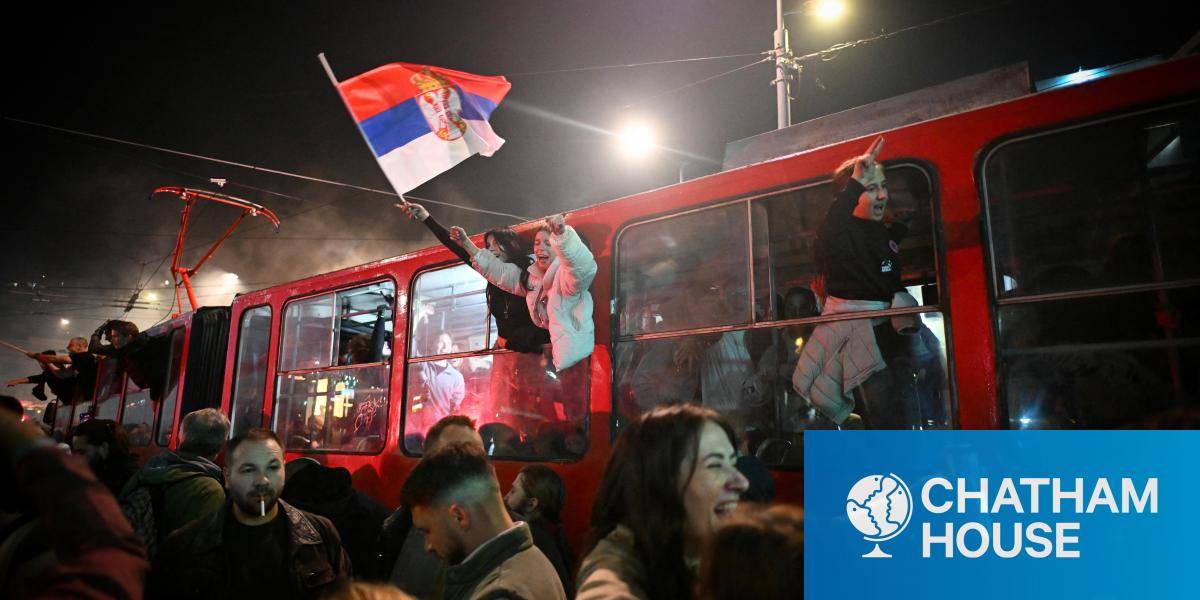
After Orbán, Vučić falls: can Serbia’s students herald a new dawn for the Balkans? Expert comment sfarrell.drupa… 27 October 2026 The consequences of President Aleksandar Vučić’s departure are hard to predict. But the victory of the Student List in Serbia is a promise of change in a country that could be a driver of economic growth and political integration in the Balkans. Six months after Viktor Orbán’s defeat in Hungary, another European strongman has fallen, conceding an election he expected to win, in a consequential turning point for the country and for Europe. President Aleksandar Vučić, in power since 2012, called Serbia’s snap parliamentary vote after nearly two years of student protests, and admitted defeat on Sunday. With almost all ballots counted , the Student List secured more than 53 per cent of the vote and around 140 seats in the 250-member parliament. Turnout approached a historic 70 per cent, the highest since Yugoslavia’s break-up in 1992. For the second time this year, a European populist with what looked to many like an unassailable grip on power has recognised electoral defeat, paving the way for a peaceful transition. The consequences of Vučić’s departure, however, particularly with regard to Serbia’s relations with Europe and Russia, remain difficult to predict. History was born in a railway station How could the seemingly unshakable rule of Vučić be brought to a sudden end by a movement that barely existed two years ago? History is sometimes born in what looks politically unremarkable. In 2024, the canopy of a recently renovated railway station collapsed in Novi Sad in northern Serbia, killing 16 people. Rather quickly what at first looked like a tragic accident became, for many, a case study in perceived corruption during the Vučić era - no matter how much the government denied accusations of favouritism and lack of transparency over contracts issued for earlier renovations. The tragedy ignited a protest from students across Serbia. It did

Geopolitical Analysis
Chatham House Expert Comments //

Russia–Africa Summit: Moscow is engaging more with Africa, but its delivery is limited

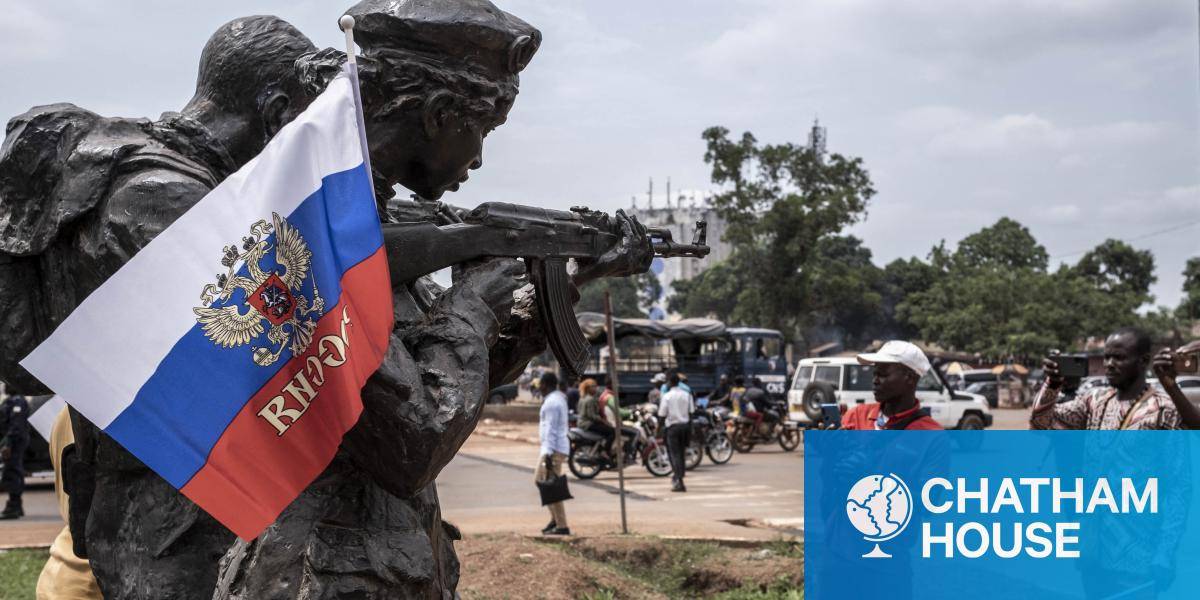
Russia–Africa Summit: Moscow is engaging more with Africa, but its delivery is limited Expert comment thilton.drupal 27 October 2026 Russia’s footprint in Africa has expanded in recent years, but engagement beyond security remains uneven. The summit alone is unlikely to change this. The third Russia–Africa Summit, which was initially announced to take place in Libya, will now take place in Moscow on 28–29 October. The summit is being portrayed as a test of Russia’s growing influence across Africa. Once again, considerable emphasis is being placed on how many African leaders will be attending the gathering. The Kremlin says 22 African heads of state are attending, a slight increase on the 17 that attended the summit’s second edition in St Petersburg in 2023. That marked a significant decrease from the 43 leaders that were present at the inaugural summit in Sochi in 2019. Then, the Kremlin attributed the lower turnout to ‘outrageous’ Western pressure. Attendance at the summit, however, is a poor measure of durable partnerships. This is particularly the case as the constraints of Russia’s partnership have become harder for African governments to overlook. While Russian engagement with Africa has expanded in recent years, its economic delivery remains limited and the outcomes of its security role in the Sahel have been uneven. The summit may therefore lead to new agreements, but with the war in Ukraine still constraining Russia’s resources, it is unlikely to change these fundamental dynamics. Summit priorities Russia’s interest in Africa reflects its own priorities. These include countering Western influence, building non-aligned partnerships and advancing multilateral reform. Expanding defence sales, securing minerals access and mitigating the impact of sanctions are also priorities. Moscow has pursued these objectives partly by using the BRICS grouping, which includes South Africa, Egypt and Ethiopia. It has also maintained its own bilateral political, security and ec

Geopolitical Analysis
Chatham House Expert Comments //

Burnham’s first budget should take a global approach to deliver for the UK

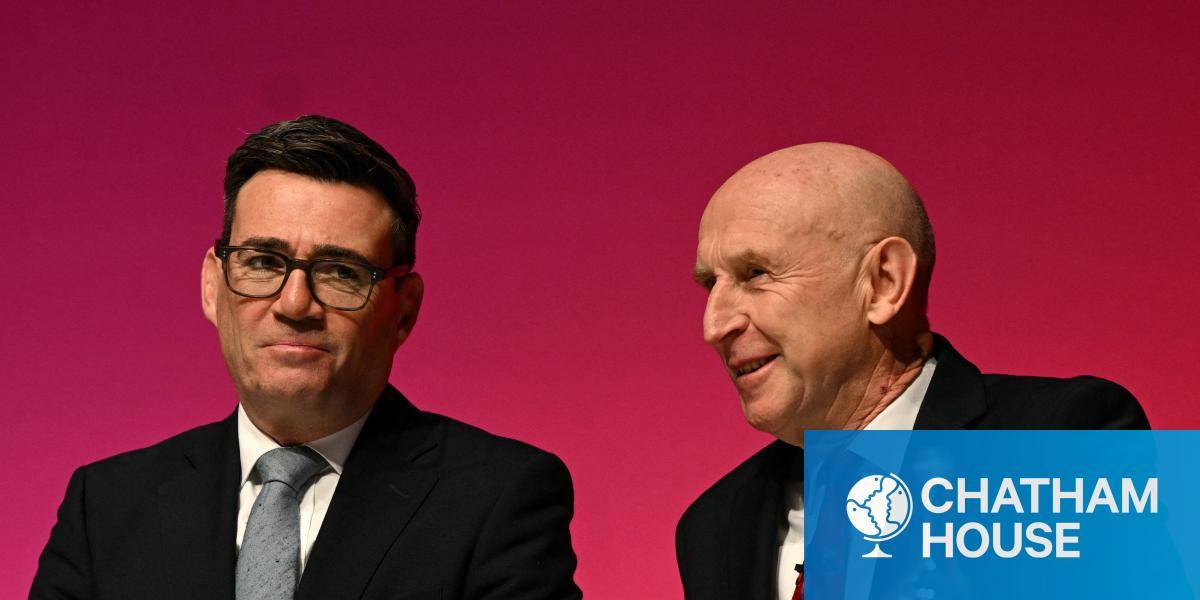
Burnham’s first budget should take a global approach to deliver for the UK Expert comment thilton.drupal 26 October 2026 The cost of living, growth and jobs are all impacted by global geoeconomics. To pass the ‘Makerfield Test’ and deliver for ordinary people, the budget should recognize this and build resilience to external shocks. This week’s budget, the first of Prime Minister Andy Burnham’s government, will aim to reduce the cost of living and deliver growth and jobs. It faces a major challenge: much of what impacts both these objectives is set abroad. I have previously argued for an international form of Burnham’s ‘Manchesterism.’ This ‘International Manchesterism’ should recognize that global forces are inseparable from local outcomes. Therefore, domestic priorities will be achieved only if the government recognizes and puts to use the two-way link between the domestic and the international. The budget needs to put geoeconomics at its centre. Its success can be measured by applying the ‘Makerfield Test’ (a reference to Burnham’s constituency in northern England) to foreign policy, which provides a framework for assessing whether the government’s international choices tangibly improve life in Britain’s communities. The test has several key pillars including economic security, energy resilience and rebalancing investment towards underserved regions. The budget is where those pillars meet the public finances. Burnham has promised better public services and lower bills. But these rest on global gas markets, food and fertiliser supply chains, and investor confidence. In this budget, Chancellor John Healey should therefore treat geoeconomics not just as context, but as a key fiscal variable. The budget cannot deliver on the cost of living, growth or jobs through domestic tax and spend alone. Cost of living: energy and food Energy resilience is central to the Makerfield Test, and household energy is where the exposure is most visible. Currently, electricity prices in

Geopolitical Analysis
Chatham House Expert Comments //

Lula wins Brazil’s presidential election; Trump says vote looks ‘rigged’: Early analysis from Chatham House experts

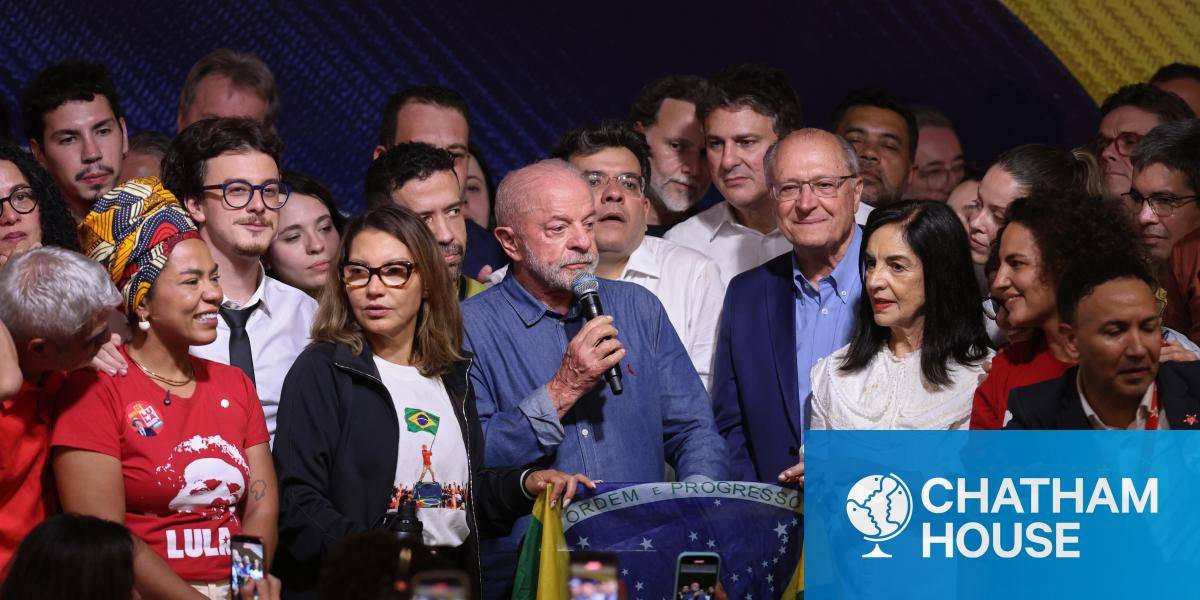
Lula wins Brazil’s presidential election; Trump says vote looks ‘rigged’: Early analysis from Chatham House experts Expert comment jon.wallace 25 October 2026 What does Lula’s unexpected victory mean for Brazil’s democracy and economy? How will foreign policy develop on the US and China? And what does this mean for the Bolsonaro family and Brazil? Chatham House experts provide insights. Luiz Inácio Lula da Silva, commonly known as Lula, has been re-elected president of Brazil for a fourth term. Lula secured 51.79 per cent of the vote against Bolsonaro’s 48.21 per cent. The victory was a surprise: Lula’s opponent, Flávio Bolsonaro, led in the first round of the election held on 4 October. The result was announced after an unusual decision on Sunday by the country’s Supreme Court, which allowed polling centres to remain open longer than planned. Lula said of his victory : ‘This, my fourth term, will be the best of any president in the history of this country’. Defeated candidate Bolsonaro initially refused to accept the result, saying: ‘It is impossible to recognize the election results, given the circumstances under which things unfolded.’ A spokesman for Bolsonaro’s Liberal Party later said they accepted the result, but still had concerns about the election process. On Monday President Donald Trump said the election looked ‘ rigged ’. Below, Chatham House experts provide analysis of the meaning of the result for Brazilians, the region and the world. Eduardo Vasconcelos on Brazil’s Supreme Court Dr Christopher Sabatini on what next for US relations? Dr Bruno Binetti on Brazil’s China policy Vanessa Rubio Marquez on the left and right in Latin America Luis Miguel Castilla Rubio on Lula’s policies and Brazil’s economy Lula’s victory and reform of the Supreme Court Eduardo Vasconcelos, Academy Fellow, Latin America Programme About 35,000 Brazilians voted after polls were due to close at 5PM on Sunday, most in the first five minutes as queues cleared. Only some 5,300 vot

Geopolitical Analysis