Members’ Christmas drinks 3 December 2026 — 18:00 TO 20:00 GMT Anonymous (not verified) 2 November 2026 Chatham House Join us at 10 St James’s Square for a chance to raise a glass with fellow Chatham House members and staff. Join us at 10 St James’s Square for a chance to raise a glass with fellow Chatham House members and staff. Please note that this event is now fully booked. If you would like to join a wait list, please contact the team . This evening is a special opportunity to meet fellow Chatham House members and staff around the Christmas tree. Please note that this reception is open to members of Chatham House only. Regrettably, we are unable to register non-member guests.
Welcome to The Ukraine Compass, a weekly digest of Ukrainian commentary and analysis from across the political spectrum, only for War on the Rocks members. Each week, we bring you a curated selection of articles from Ukrainian media offering insight into how Ukrainians themselves debate the issues shaping their country.Western coverage often narrows the view to the battlefield — these pieces widen it, revealing the texture of daily life, politics, and public argument in a nation at war. The perspectives gathered here are varied, candid, and often surprising, together forming a more complete picture of Ukraine as it really is.Frontline The post Corruption in the Crosshairs: The Debate Over Transparency and Saving Face appeared first on War on the Rocks .
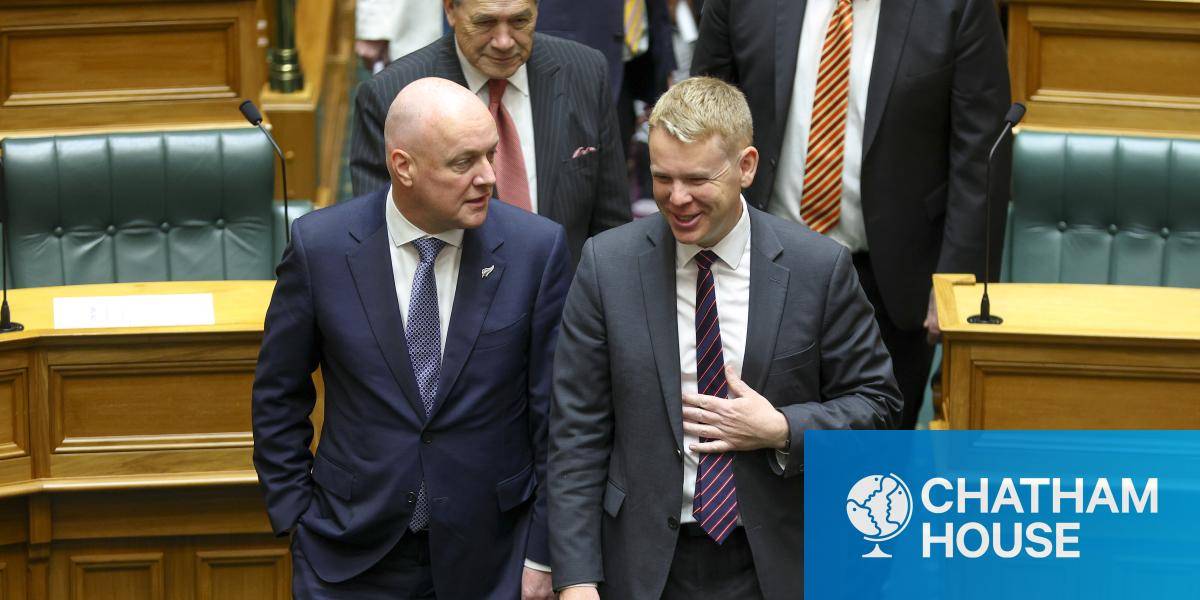
Will New Zealand’s election change its foreign policy? Expert comment jon.wallace 2 November 2026 The current coalition has sought closer relations with the US and rowed back climate commitments. What would change under a coalition of the left? On 7 November, New Zealanders go to the polls in what looks set to be a closely contested general election. As elsewhere, anxiety about the cost of living has dominated the campaign. International affairs tend to feature at the bottom of voter concerns . However, like many US citizens voting in this year’s midterm elections, some New Zealanders blame international events like the war in Iran for the higher costs that are their top priority. New Zealand’s foreign policy is therefore at stake in this election. And a change of government could substantially reshape the country’s position on key issues. The foreign policy reset Since 1996, New Zealanders have voted in a Mixed Member Proportional (MMP) system which normally produces a coalition government. In 2023, New Zealand formed its first three-party coalition government under MMP. The centre-right National Party, led by Christopher Luxon, was joined by the right-libertarian Act Party and right-wing populist New Zealand First Party, led by Winston Peters. Peters took on the role of foreign minister – a role he had held twice before. As a small, open, Pacific economy, recent New Zealand governments have generally sought balance in foreign policy. On the one hand they have nurtured the increasingly important trade relationship with China, building on a long history of openness to engagement with Beijing (China has been New Zealand’s largest trading partner since 2017 ). On the other hand, governments have sought security and other partnerships with the US and other IP4 countries like Japan, Australia and South Korea. However, after the 2023 election the coalition announced a ‘reset’ in foreign policy, aligning New Zealand more closely with the US and Australia. This has not mea
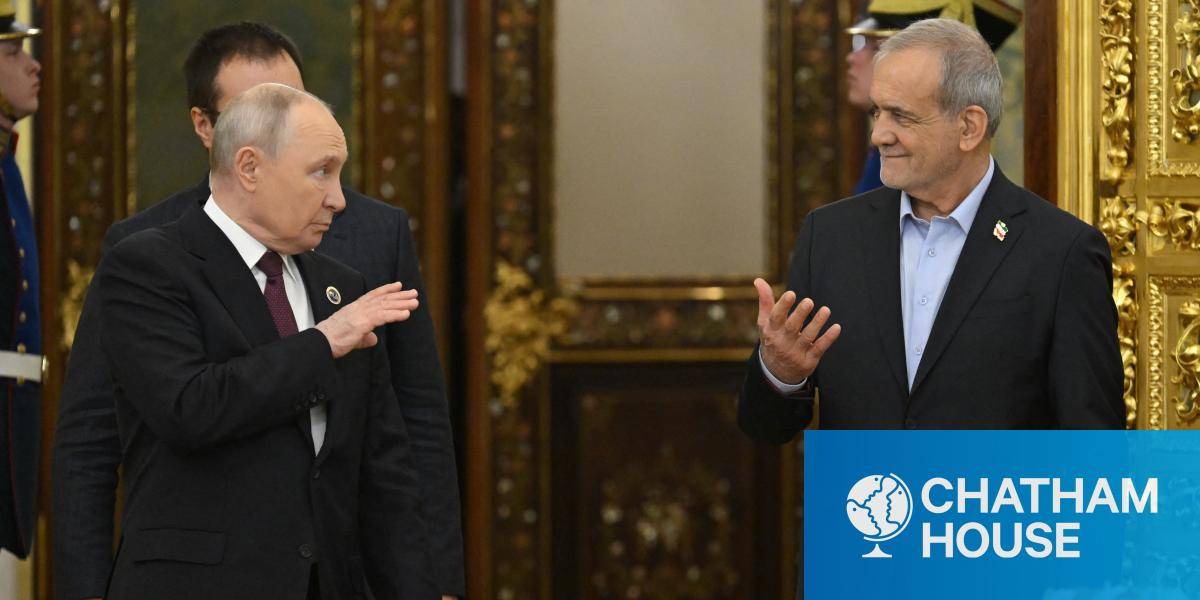
The war is pushing Iran closer to Russia Expert comment thilton.drupal 2 November 2026 A flurry of diplomatic meetings and positive statements suggest Tehran sees closer cooperation with Moscow as key to its short-term survival and long-term deterrence. The US-Israeli war with Iran is fundamentally changing how Tehran views Russia. Moscow was previously perceived by some in Tehran as an unreliable partner that benefited disproportionately from Iran’s support. But Russia is now increasingly seen as an important partner to ensure Iran’s military survival, post-war reconstruction and long-term deterrence. Positive meetings In October alone, senior Iranian and Russian officials held three high-level meetings, reflecting the growing importance both governments attach to the partnership. On 8 October, Iran’s president Masoud Pezeshkian met Russian president Vladimir Putin in Turkmenistan on the sidelines of regional summit meetings. They emphasized the mutual political will to deepen ties across virtually every sector, including trade and economic cooperation. On 19 October, Russia’s foreign minister Sergei Lavrov travelled to Tehran for the first since the war began on 28 February. He met President Pezeshkian, Foreign Minister Abbas Araghchi and Supreme National Security Council head Mohsen Rezaei. They discussed energy, transport and broader bilateral relations. The meetings emphasized the need to advance the comprehensive strategic partnership signed in January 2025, continuing economic and investment cooperation despite the challenges posed by the war. Related work Russia–Africa Summit: Moscow is engaging more with Africa, but its delivery is limited After the meetings, Araghchi stated: ‘never in our history have Iran and Russia worked as closely as now.’ Pezeshkian thanked Russia for its support during the war. Security chief Rezaei also emphasized Tehran’s determination to strengthen strategic cooperation with Moscow, indicating that Iran’s security leadership also
What happens when the military depends on technologies it doesn’t own? Sharon Weinberger, the new editor-in-chief of the Bulletin of the Atomic Scientists, stops by the studio to discuss her book, Valley of Death: How Big Tech Is Fueling the Future of War. She delves into the Pentagon’s disputes with SpaceX and Anthropic, why the tech industry’s split from the military was about money more than ideology, and how a new generation of firms could become the next primes. Image: Petty Officer 1st Class Alexander Kubitza via DVIDS. The post The Pentagon-Silicon Complex and the Rise of the Neo-Primes appeared first on War on the Rocks .
Benjamin Netanyahu’s interest in cryptocurrency reveals both the continuing power of financial sanctions and the current limits of technological attempts to circumvent them.
Israel in deadlock: What next for a divided country? Audio sseth.drupal@c… 30 October 2026 In this week’s episode of Independent Thinking, our experts discuss the outcome of Israel’s election. Israel faces weeks of political horse-trading after the most pivotal election in the country’s history delivered no clear result. Neither victorious nor vanquished, Benjamin Netanyahu is still prime minister and lives to attempt another coalition negotiation – and perhaps launch further strikes on Iran to shore up his interim power. Arab parties have secured a record number of seats, but the question remains whether opposition Jewish parties will enter a coalition with them. Will anyone do a deal with Netanyahu? What does it all mean in a deeply polarized society riven by settler violence, personality-centred politics and with a seemingly permanent security emergency? To examine the election results and what they mean for Israel’s future, Bronwen Maddox is joined by The Economist’s Israel editor Anshel Pfeffer, plus Zizette Darkazally and Yossi Mekelberg from Chatham House’s Middle East and North Africa Programme. About Independent Thinking Independent Thinking is a weekly international affairs podcast hosted by our director Bronwen Maddox, in conversation with leading policymakers, journalists and Chatham House experts providing insight on the latest international issues. More ways to listen: Apple Podcasts and Spotify . Explore our other Chatham House podcasts .
Israeli elections on Oct. 27 produced a complex result, with neither Prime Minister Benjamin Netanyahu’s bloc nor the opposition alliance, led by Gadi Eisenkot, winning enough seats in the Knesset to form a government. The opposition faces a tricky choice: attempt to form a unity government with Netanyahu, after channeling anger at the prime minister during the campaign, or partner with the Israeli-Arab parties, which performed unusually well in the election. The latter option, however, is deeply unpalatable to most of the Jewish opposition. A period of negotiations now commences, while Netanyahu remains in a caretaker position. If no governing The post What Israel’s Election Results Mean for the Middle East and Beyond appeared first on War on the Rocks .
For decades, militaries have chased the next revolution in warfare. But what actually makes a revolution in military affairs revolutionary? Is there one happening now? Does it matter? Is it just about drones and AI or something more? Ryan digs into the promises, pitfalls, and persistent myths of military transformation with Mike Horowitz (Penn), Stacie Pettyjohn (CNAS), and Benjamin Jensen (CSIS). This episode is brought to you by Arkenstone Defense. Learn more about them at warontherocks.com/ark Image: ChatGPT The post What’s a Revolution in Military Affairs Good For? appeared first on War on the Rocks .
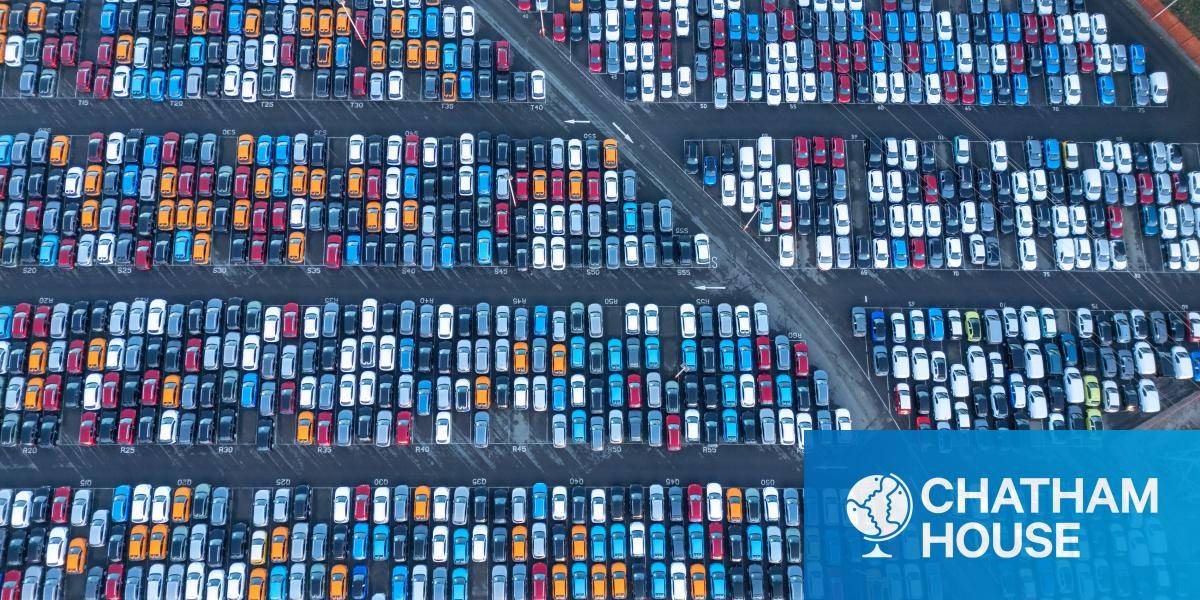
Brussels or Beijing? The EU’s ‘Made in Europe’ plans will force the UK to choose Expert comment jon.wallace 29 October 2026 Either way, the UK will be forced to pay a price. The EU’s Industrial Accelerator Act (IAA) is pushing the UK toward an economic confrontation with China it would rather avoid. The IAA plans to introduce new ‘Made in Europe’ obligations, conditioning access to certain public subsidy and procurement schemes on the use of sufficient local, European, content. This is intended, in part, to protect European industry from cheap, high-quality, Chinese goods such as hybrid and electric vehicles (EVs). The UK government, seeking closer economic integration with the EU, wants ‘Made in Europe’ provisions extended to include its firms. But key EU member states are conditioning any extension on the UK aligning with EU economic security measures. A 15 October Franco-German paper said that ‘Made in Europe’ treatment for the automotive sector should only be extended to the UK and a small group of other partners on the condition of both reciprocity and ‘dynamic alignment with EU conditions related to third countries’ investments and on relevant EU trade defense measures’. In practical terms, France and Germany want the UK to impose tariffs on Chinese EVs to prevent the further erosion of their manufacturers’ UK market share. They also want the UK to impose stricter conditions on foreign direct investment into key manufacturing sectors to prevent Chinese firms from qualifying for future EU subsidies or procurement schemes via their UK-located operations. With the next EU–UK summit scheduled for 20 November, this creates a problem for Prime Minister Andy Burnham’s new government. Much of the media reporting has focused on the question of whether the UK will agree to impose tariffs on Chinese vehicles. But the focus on investment is arguably more consequential, given the UK’s desire to attract Chinese automotive manufacturing facilities to Britain. The UK’s China