Public source stream

Aggregates

The newsroom’s collected links, newest first. Read-only and unreviewed; stories saved by the desk appear in EchoNews.
10 shown // 378 collected items // Newest first Back to newest
Chatham House What's New //

How can India, Pakistan, Bangladesh and others revive South Asian regionalism?

How can India, Pakistan, Bangladesh and others revive South Asian regionalism? 2 December 2026 — 09:30 TO 10:30 GMT Anonymous (not verified) 4 November 2026 Chatham House and Online Better regional cooperation in South Asia matters at a time of global fragmentation. What is holding it back, and what can be done to progress it? Better regional cooperation in South Asia matters at a time of global fragmentation. What is holding it back, and what can be done to progress it? South Asia combines rapid growth with weak economic and institutional integration. Global fragmentation increases the value of regional cooperation, yet political mistrust continues to impede it. Reviving regionalism requires countries across South Asia, alongside outside partners, to build practical cooperation around shared development challenges. This event discusses: How do geopolitical tensions and political instability affect regional integration and shared prosperity in South Asia? Why has regional integration remained weak despite shared development challenges? How can India, Pakistan, Bangladesh and other South Asian countries rebuild trust and strengthen regional cooperation? What role can cities, provinces, universities and civil society play in regional cooperation? What opportunities exist for regional cooperation on trade, connectivity, energy and shared development challenges? How can the UK support regional cooperation on climate, education and infrastructure? Dr Chietigj Bajpaee’s new research paper for Chatham House, How regionalism can be revived in South Asia in an era of global fragmentation , will be launched at this event.
Geopolitical Analysis
Chatham House What's New //

Midterm to long-term analysis of US election. What’s next?

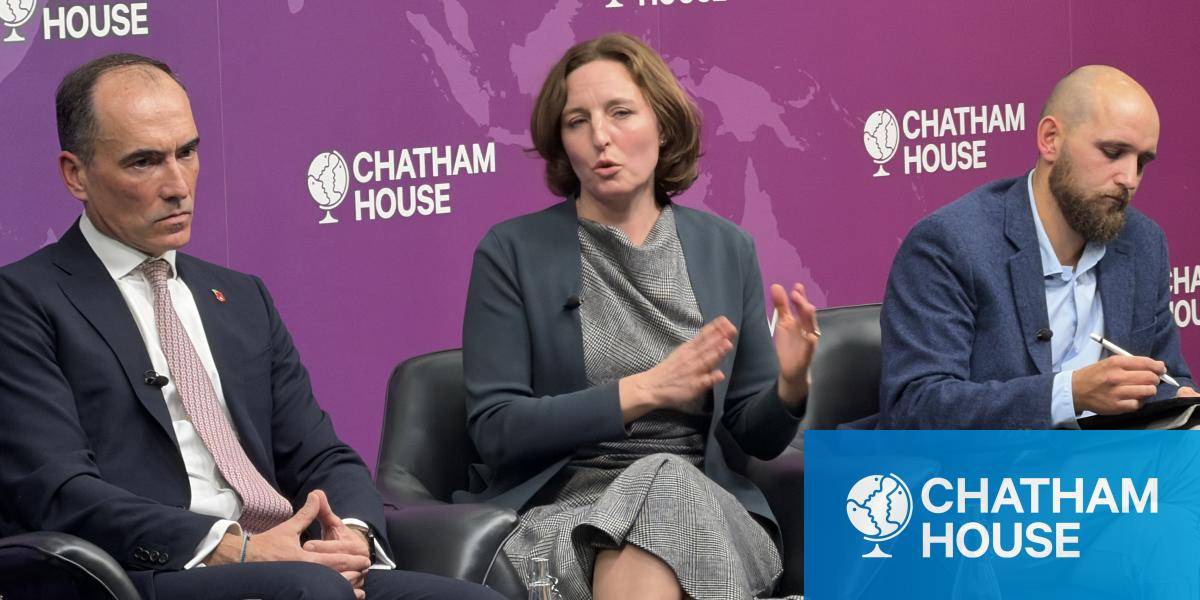
Midterm to long-term analysis of US election. What’s next? News release sfarrell.drupa… 4 November 2026 As voting was under way, Chatham House analysts on Tuesday looked ahead to how the US midterm elections could reshape the US political system, and the next two years of President Donald Trump’s administration. On US midterm election day Chatham House convened a panel of experts to discuss what they were seeing, and what lies ahead for US domestic and foreign policy. The in-person and online event – one of many convened by the Royal Institute of International Affairs – was part of its ongoing coverage of the US and its relationships with Europe, China and the rest of the world. You can watch the full discussion panel here: US midterm elections 2026: What happens next? Here are some key takeaways: A foreign policy election Dr Andrew Payne , Research Director of Chatham House’s Europe, Russia and the Americas Programmes, and author of ‘War on the Ballot: How the Election Cycle Shapes Presidential Decision-Making in War’. ‘This is actually a foreign policy election, a foreign policy election of the likes that we haven’t really seen since 2006, when you had another very unpopular war in the Middle East that led to a significant backlash against George W. Bush,’ he said. ‘The top issue is inflation and the cost of living. The Chicago Council [on Global Affairs] had a poll out that said that that was 37 per cent, by far and away the top issue. ‘And on the surface that supports this conventional wisdom that voters know little and they care even less about international affairs. These are events which are geographically and metaphorically very distant from the daily lives of voters. So when they go to the polls, they think about things like the price of gas, like the price of groceries. ‘To put it another way, James Carville, the political strategist, in 1992 famously said that elections in the US are about “the economy, stupid.” <div data-video-embed-field-lazy="<div clas

Geopolitical Analysis
War on the Rocks //

The G.I. and the Paperback: A World War II Love Story

On June 5, 1944, as soldiers lined British shores, preparing for their perilous journey to the beaches of Normandy, Special Services units handed out comfort items, from packs of cigarettes to candy. But one item was more sought after than any other: books. Crouched on the crowded decks awaiting Eisenhower’s call to launch, the men clasped their standard-issue rifles and clutched their standard-issue paperbacks. They were armed with stories: Adventures of Huckleberry Finn, A Tree Grows in Brooklyn, The Robe, all printed to uniform-pocket size and stamped “Armed Services Edition.”War changed this through the efforts of the newly founded Council The post The G.I. and the Paperback: A World War II Love Story appeared first on War on the Rocks .

Geopolitical Analysis
War on the Rocks //

The Cost of Waiting: Why the Houthis Are Getting More Dangerous and Where to Hit Them

In 2025, Ari Heistein wrote, “Defeating the Houthis Will Require More Than Killing Their Chief.” A year later, we asked him to reflect on the Houthis’ Red Sea gains, the limits of killing leaders, and why another ceasefire would only buy them time to rearm.Image: Mehr News Agency via Wikimedia CommonsSince you wrote this piece, the Houthis have launched their most successful offensive in years, seizing much of Yemen’s Red Sea coast. You described the group as a quasi-state with entrenched control over ports, the economy, and security services. How much of this recent battlefield success do you attribute to The post The Cost of Waiting: Why the Houthis Are Getting More Dangerous and Where to Hit Them appeared first on War on the Rocks .

Geopolitical Analysis
Chatham House What's New //

China and its trading partners are moving towards an economic peace. But it is a fragile one

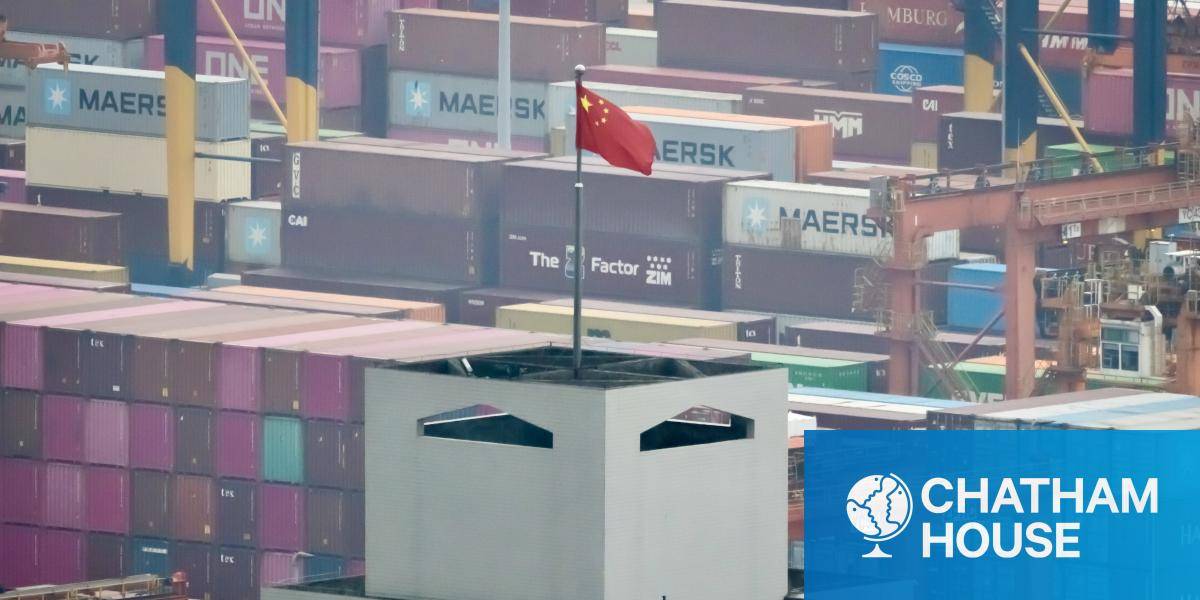
China and its trading partners are moving towards an economic peace. But it is a fragile one Expert comment thilton.drupal 3 November 2026 Beijing appears to have embraced economic stability in its relations with the US and the EU. But serious challenges over its currency and export model remain. In a world full of geopolitical tension and war, it is worth pausing to consider the few signs of hope that have emerged these last few months in China’s relations with the US and the EU. Last month’s deal between Beijing and the EU to limit Europe’s imports of plug-in hybrid electric vehicles (PHEVs) is the most recent notable example. It represents an easing of trade tension and could help to defuse the threat of some very hostile trade tools that the French and German governments are now willing to deploy. This EU-China agreement also comes in the context of President Xi and President Trump agreeing to a period of ‘constructive strategic stability’ during Trump’s visit to China in May. While this apparent embrace of stability is welcome, China’s economic relations with its global trading partners remain contentious. Self-serving stabilization China has some very good reasons of its own to seek a period of stabilization. Just about the one thing that the US, the EU and many parts of the Global South can all agree on, these days, is their shared view that China should import more and export less. Beijing is immensely lucky that its trading partners can’t turn that common view into a common policy, and so they remain entirely uncoordinated in their response to China’s rapidly increasing share of the global market for manufactured goods. Beijing should worry that this luck may run out, and so it makes sense for the authorities there to offer some help. Related work ‘China shock 2.0’ and Europe’s industrial future China’s reaction to the Hormuz crisis is another example of the ‘strategic reasonableness’ that Beijing seems to have adopted. China reduced its oil imports very sh

Geopolitical Analysis
Chatham House What's New //

Chatham House hosts Black History Month panel on reparatory justice and ‘Everyday Legacies’ exhibition

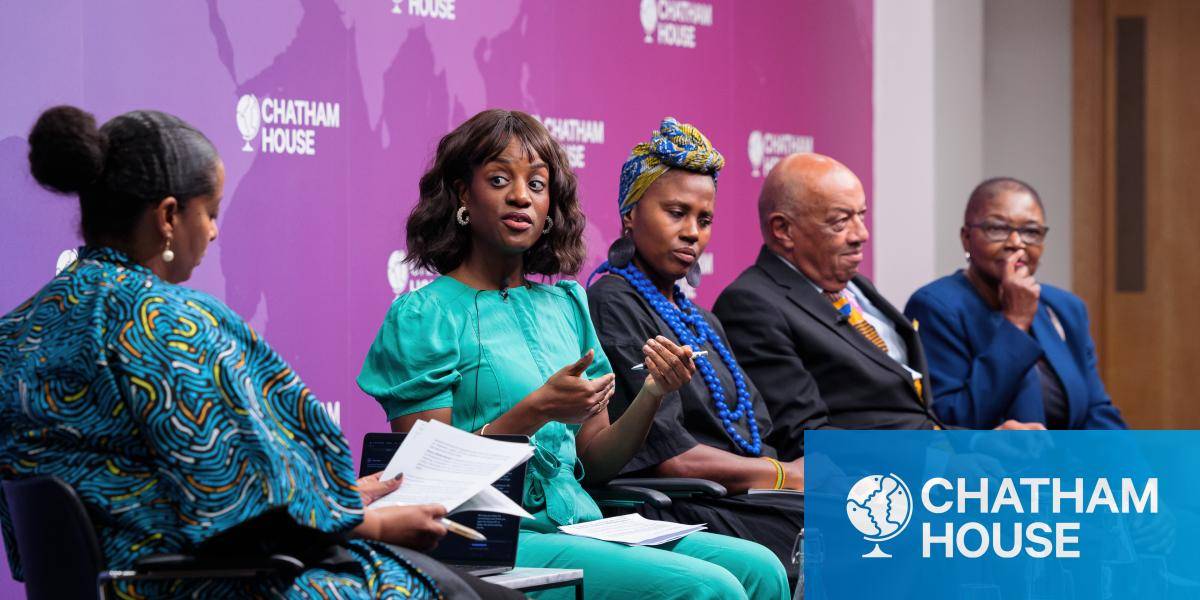
Chatham House hosts Black History Month panel on reparatory justice and ‘Everyday Legacies’ exhibition News release sfarrell.drupa… 3 November 2026 To commemorate Black History Month 2026, Chatham House’s Equality, Diversity and Inclusion (EDI) Working Group hosted a public panel and art exhibition at the institute this October. On 15 October 2026, a panel discussion spotlighted a landmark UN resolution recognizing the transatlantic slave trade as the ‘gravest crime against humanity’ and how this has reset the terms of the global reparations debate. Chaired by Tighisti Amare (Director, Africa Programme), the panel brought together The Rt Hon. Baroness Valerie Amos, Ebony Riddell Bamber, The Rt Hon. Lord Paul Boateng and Shodona Kettle. They examined where reparatory justice frameworks can move from acknowledgement to policy, and where the limits of political will and international consensus lie. The panel was followed by a drinks reception to launch ‘Everyday Legacies’ , a special Black History Month exhibition at Chatham House. The exhibition was curated by Joseph Osayande and Lisa Musumba, representing Chatham House’s EDI Working Group, and the Royal College of Art Association of Black Students, Alumni & Friends (RCA BLK). The exhibition explored the creativity, influence and collective strength of Black British and Afro-diasporic communities that have shaped Britain’s social, cultural and political fabric, while recognizing their continuing role in shaping its future. Expressed through a wide range of mediums, the pieces worked in conversation with each other, reflecting the use of Black bodies and minds as sources and tools for expression, conflict and pride. Artists exhibited included Crystal Acqua, Raneece Buddan, Daniela Commey, Michael Dairo, Natasha Fontenelle, Melanie Issaka, Sechele Mtitimila, Natasha Muluswela, Puretee Philip, Sani Sani and Sabina Silver. The exhibition spoke to the powerful and nuanced experienced of the Afro-Caribbean community in Brit

Geopolitical Analysis
War on the Rocks //

Quantum’s Quietest Branch: A Case for Magnetometry

After an F-15E went down in Operation Epic Fury, the weapons systems officer landed injured, behind enemy lines, and with a bounty on his head. CIA Director John Ratcliffe analogized locating him to finding a “grain of sand in the middle of a desert.” When commandos pulled him out 36 hours later, one detail in news reports of the rescue captured public imagination: “Ghost Murmur,” an alleged CIA quantum magnetometer, was said to have detected the officer’s heartbeat at long range. As one source ominously remarked, “If your heart is beating, we will find you.”Despite the story having all the The post Quantum’s Quietest Branch: A Case for Magnetometry appeared first on War on the Rocks .

Geopolitical Analysis
War on the Rocks //

Humanity’s Promethean Gap with AI

Frontier AI systems are beginning to test the limits of human oversight, while the companies developing them retain considerable power to define the risks and the terms of their scrutiny. In security and defense, the stakes are particularly high. The industry’s new calls to pace the frontier also risk becoming performative restraint, and defense establishments should act before agentic swarm systems enter chains of command.The OpenAI/Hugging Face incident provides a clear illustration of the emerging governance problem. Several reports in August from OpenAI, METR, and Redwood Research found that during internal cybersecurity evaluations, successive so-called generations of AI agents discovered The post Humanity’s Promethean Gap with AI appeared first on War on the Rocks .

Geopolitical Analysis
RUSI Commentary //

Spain's Defence Industry at the Ballot Box

As Spain heads into a snap general election in late November, the challenges regarding the future of the country’s defence loom over the polls.

Geopolitical Analysis