Public source stream

Aggregates

The newsroom’s collected links, newest first. Read-only and unreviewed; stories saved by the desk appear in EchoNews.
10 shown // 378 collected items // Newest first Back to newest
Chatham House What's New //

China has the APEC stage. But Japan may have the momentum

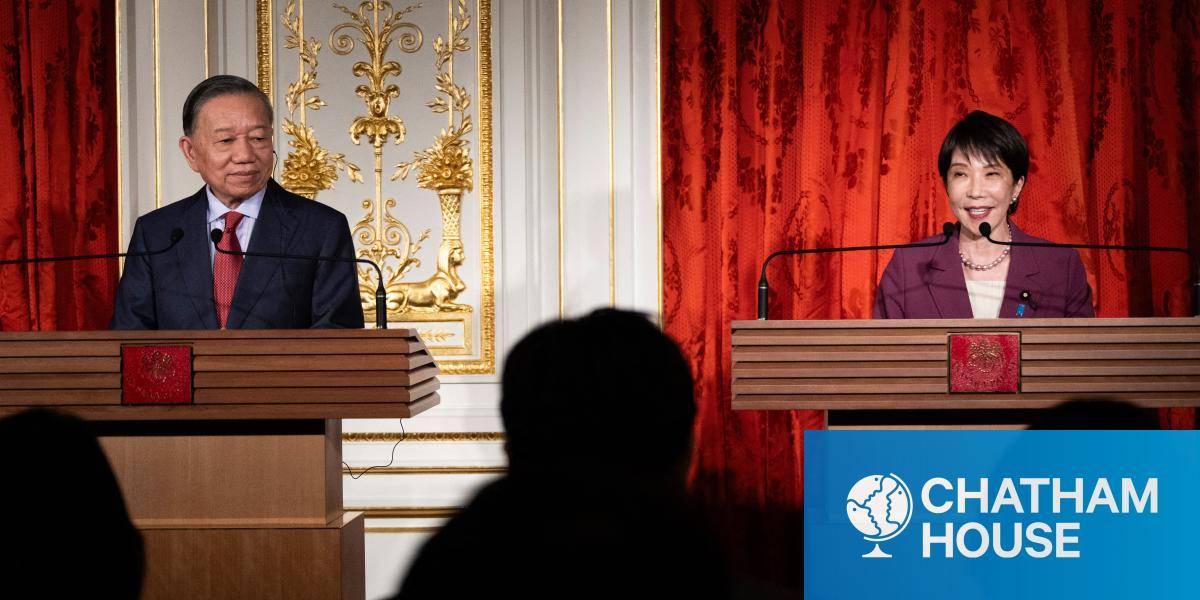
China has the APEC stage. But Japan may have the momentum Expert comment jon.wallace 13 November 2026 Tokyo cannot compete with Beijing’s economic firepower. But it offers Indo-Pacific countries a diplomatic and economic partner that delivers tangible gains without demanding allegiance in return. The Asian Century is upon us with China as its visionary leader. That will be the message Beijing will hope to drive home when it hosts the Asia-Pacific Economic Cooperation (APEC) summit on 18 to 19 November. The summit is billed as a forum to address ‘building an Asia-Pacific community to prosper together’. But it will take place as the world’s most populous region grapples with challenges of energy insecurity, supply chain disruption, AI governance, and technological upheaval – and as growing geopolitical tensions are causing the realignment of international partnerships. Beijing has not shied away from promoting itself as champion of the Global South. But for Indo-Pacific economies seeking a partner to build consensus and tackle the region’s most pressing challenges, the momentum may well be with Japan. Low expectations China’s history of lifting its people out of poverty at breathtaking speed has been nothing short of remarkable. Nevertheless, there is a trust deficit across the Indo-Pacific, where Beijing has established itself as the undisputed regional hegemon. Its vision for growth, as outlined in in its latest Five-Year Plan, seeks to make China the global leader in advanced technology by 2030. But there are concerns among regional countries that this will mean Beijing further exploits its dominance and exacerbates global economic warfare. Tokyo’s Free and Open Indo-Pacific (FOIP) strategy has evolved to meet the new strategic reality. Meanwhile expectations for gatherings such as APEC, and the ASEAN summit in the Philippines preceding it, are low. The possibility of a display of unity, let alone a collective action plan, seems remote, especially as China will con

Geopolitical Analysis
ECFR //

AfD on the rise

Mark Leonard welcomes Jeremy Cliffe and Jana Puglierin to discuss the rise of the Alternative for Germany (AfD) and Germany’s role in Europe

Geopolitical Analysis
War on the Rocks //

How Purges Are Affecting Chinese Military Readiness and Taiwan Contingencies

Since 2022, Chinese General Secretary Xi Jinping has purged at least 100 senior military officials, according to a February report from the Center for Strategic and International Studies, with more cases occurring since then. The rate of dismissals and disappearances has increased substantially in the last two years. Recent examples include Gen. Zhang Youxia, Gen. Liu Zhenli, and Zhong Shaojun, formerly the head of the General Office of the Central Military Commission. Many of these officials have been accused of corruption, with some facing trial.These widespread purges have fundamentally changed the high command of China’s military at a time when The post How Purges Are Affecting Chinese Military Readiness and Taiwan Contingencies appeared first on War on the Rocks .

Geopolitical Analysis
Chatham House What's New //

What AI’s nightmare November means for politics, power and business

What AI’s nightmare November means for politics, power and business Audio sseth.drupal@c… 12 November 2026 In this week’s episode of Independent Thinking, our experts assess the impact of US voter discontent, scandal and market setbacks for the tech sector. American voters’ aversion to data centres and suspicion of AI’s potential to destroy jobs played a major role in the Republican Party’s losses in the US midterms. Then the tech-heavy US stock market tumbled as investors became concerned that a Democrat-controlled congress might be less accommodating of hyperscalers. Recovery has been shaky, and the resignation of NVIDIA’s CEO Jensen Huang following his affair with an alleged Chinese spy is likely to make things worse. Bronwen Maddox is joined by David Lubin from our Global Economy and Finance Programme, and Alex Krasodomski, director of our Digital Society Programme. About Independent Thinking Independent Thinking is a weekly international affairs podcast hosted by our director Bronwen Maddox, in conversation with leading policymakers, journalists and Chatham House experts providing insight on the latest international issues. More ways to listen: Apple Podcasts and Spotify. Explore our other Chatham House podcasts .

Geopolitical Analysis
War on the Rocks //

The Promise of Biomanufacturing at the Edge

As the old adage goes, “Amateurs talk strategy. Professionals talk logistics.” Military operations are utterly dependent on complex supply chains to move food, fuel, and other essential products across long distances and through contested environments to reach the warfighter. These vital supply lines are fragile at every stage: production concentrated in a single facility can be disrupted, key inputs may come from unreliable — or adversarial — foreign suppliers, and the ports, airfields, and roads that deliver goods the final mile are often the most vulnerable.The threat of this fragility eroding a modern force’s capabilities is very real. As the The post The Promise of Biomanufacturing at the Edge appeared first on War on the Rocks .

Geopolitical Analysis
Chatham House What's New //

Africa Aware: Tigray’s renewed war and risks to the wider Horn of Africa

Africa Aware: Tigray’s renewed war and risks to the wider Horn of Africa Audio thilton.drupal 11 November 2026 Guests discuss the renewal of conflict in Tigray, its regionalization, the options for containing the violence and possible pathways to peace. In late September, fighting resumed in Tigray – almost four years after the Pretoria Agreement brought the 2020-22 war to an end. Disputes over the agreement’s implementation remain unresolved, while federal forces have now taken control of the regional capital Mekelle and set up a caretaker administration. At the same time, there are fears that instability within Ethiopia could draw in neighbouring states, as relations with Eritrea become increasingly strained. In this episode, guests Dr Mulugeta Gebrehiwot Berhe, Blen Mamo and Dr Abel Abate Demissie join the Africa Programme’s Ahmed Soliman and Lisa Musumba to discuss the renewal of conflict in Tigray, its regionalization, the options for containing the violence and possible pathways to peace. About Africa Aware Africa Aware is a podcast from the Chatham House Africa Programme bringing together leading international experts to provide in-depth analysis and sharp insights on the political, economic and social issues shaping African countries, their international relations and the continent as a whole. You can also listen to Africa Aware on Apple Podcasts and Spotify. Read the Expert Comment from Ahmed Soliman and Dr Abel Abate Demissie here: War has returned to Tigray. This time it may not stay in Ethiopia

Geopolitical Analysis