
Public source stream

Aggregates

The newsroom’s collected links, newest first. Read-only and unreviewed; stories saved by the desk appear in EchoNews.
10 shown // 378 collected items // Newest first Back to newest
Chatham House What's New //

The UK and the EU need an economic security partnership

The UK and the EU need an economic security partnership Expert comment thilton.drupal 16 November 2026 The UK–EU Summit is an opportunity to secure a new partnership suitable for an increasingly hostile global economy. It should start with an information-sharing arrangement about high-risk investments, including from China. The second UK–EU ‘reset’ summit takes place on 20 November, after a six-month delay to give prime minister Andy Burnham’s new government time to settle in and set its priorities. It is expected to deliver on the deals kickstarted by the Starmer government, most of which focus on reducing barriers to trade and mobility. These include a sanitary and phytosanitary (SPS) agreement that removes most checks on trade in animals, plants, and their products, as well as a youth experience scheme and the linking of the UK and EU emissions trading systems. Completing these agreements is important for growth – the UK government estimates the SPS deal could eventually be worth £5.1 billion a year – and for building trust with the EU after years of political setbacks. But the Burnham government will likely also want a more strategic partnership with the EU on security, defence and geopolitics. Central to this should be the goal of economic security, which has become a key priority for governments around the world. Economic security revolves around protecting sensitive national assets from hostile interference or exploitation, withstanding coercion and supply shocks, and building the strategic capabilities needed to stay competitive. Beyond ‘Made in Europe’ Much of the reporting on this topic has focused on whether UK firms will be covered by the EU’s ‘Made in Europe’ initiatives. These measures – the most significant of which are in the proposed Industrial Accelerator Act – favour European-made products in public procurement and subsidy schemes, with the aim of rebuilding the EU’s industrial base and reducing its strategic dependencies. The concern is that, unl

Geopolitical Analysis
Chatham House What's New //

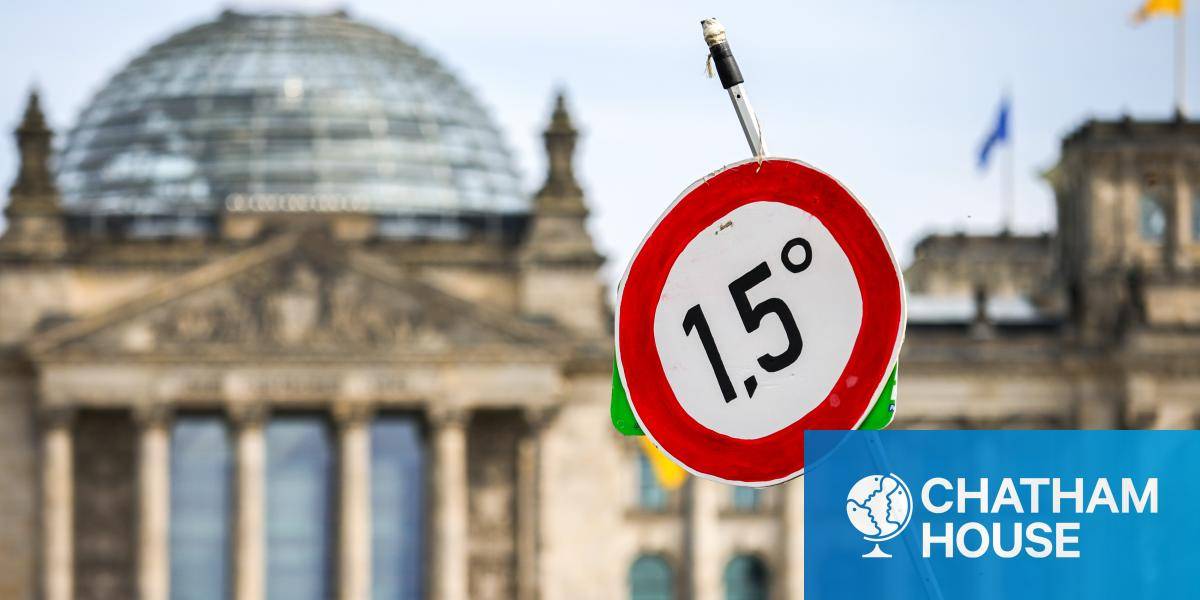
The 1.5°C target will be missed. Where does climate action go from here?

The 1.5°C target will be missed. Where does climate action go from here? Expert comment LToremark 16 November 2026 Breaching 1.5°C will see climate impacts continue to escalate. But adapting to a hotter world must not derail efforts to stop further warming. Only a decade after governments signed the Paris Agreement, the treaty’s goal of limiting global heating at 1.5°C is already slipping away. Overshooting the 1.5°C target is ‘widely assessed as unavoidable’, according to the UN . Even the Paris Agreement’s broader aim of remaining well below 2°C looks to be in jeopardy: under current policies 2.7°C is expected by the end of the century. The climate challenge balloons above 1.5°C. COP31 president Murat Kurum said in his opening remarks at this year’s conference that even a brief overshoot would cause ‘irreversible loss and damage’ and stressed that the extent and duration of any such overshoot must be minimized. Breaching the 1.5°C target also means climate impacts will continue to escalate, far beyond what has been seen in recent years. It will usher in a new era in which the consequences of climate change become systemic and global. Meeting this challenge – and minimizing the duration of an overshoot – will require more than redoubling efforts to tackle the causes of climate change. The need for adaptation This year has seen many extreme weather events, from heatwaves in Europe to catastrophic flooding in Nepal. In some cases, they have been beyond even what climate models have predicted . This rapid evolution of climate impacts is not just causing greater destruction but also brings with it several strategic challenges. Take insurance, for example. A group of senior whistleblowers recently warned that the insurance industry is increasingly struggling to insure assets – including homes – due to climate risk and raised concerns about the viability of its operating model. Overshoot will only escalate this complex and fast-moving situation. Related work Europe’s sum

Geopolitical Analysis
Chatham House What's New //

When the lights go out, how will Europeans access their money?

When the lights go out, how will Europeans access their money? Expert comment thilton.drupal 16 November 2026 Recent outages and cyberattacks have exposed the vulnerability of digital payments. The EU and UK should use their upcoming summit to develop compatible offline digital currencies. Across Europe, economies have become increasingly digital, bringing significant benefits to businesses and consumers. However, growing reliance on digital payment systems means that when these systems fail, people are unable to spend the money in their bank accounts. Sometimes, this is because of technical failures. On 20 October 2026, due to an extended power outage that paralysed Google Cloud services, millions of UK residents were unable to make card payments, cash withdrawals or bank transfers. In other cases, hostile actors have launched cyberattacks that paralyse European payment systems. Figures from September 2026 show a 61 per cent year-on-year increase in cyberattacks across Europe, many of which targeted financial services. During a prolonged power outage or cyberattack, millions of consumers could lose the ability to pay. These risks have prompted the EU and the UK to issue fresh crisis preparedness strategies, such as the UK government’s ‘Be Ready’ campaign. A key aspect of these strategies is the advice to keep adequate cash at hand in case digital systems go down. However, the use of cash has long been in decline: only 3 per cent of UK adults mainly use cash for their day-to-day spending. Consumers increasingly prefer the convenience of digital payments, while many businesses no longer accept cash. This raises questions about whether people will have sufficient cash available when digital payment systems fail. This problem is compounded by the fact that ATMs also require electricity to dispense cash. As a result, during a prolonged power outage or cyberattack, millions of consumers could lose the ability to pay with their cards and phones or withdraw cash from their

Geopolitical Analysis
War on the Rocks //

RIP to the $1.45 Trillion FY2027 Defense Budget

The 2026 Congressional midterms appear to have dealt a final death blow to the Trump administration’s prospective $1.45 trillion Fiscal Year 2027 Department of Defense budget request. While there remains a path forward to salvage the base budget request of $1.1 trillion, it is exceedingly difficult to envision a legislative pathway for the $350 billion reconciliation request. The reconciliation request has always faced considerable obstacles stemming from divisions within the Congressional Republican caucus, but the extent of the midterm defeat and limited legislative calendar make its prospects likely insurmountable. Senate Majority Leader John Thune and Speaker of the House Mike The post RIP to the $1.45 Trillion FY2027 Defense Budget appeared first on War on the Rocks .

Geopolitical Analysis
Foreign Affairs //

Why Israel Is Losing America

The country must change course—or lose America.

Geopolitical Analysis
War on the Rocks //

The Limits of Quiet Resignation from the U.S. Military

According to CNN reporting, Joint Chiefs Chairman Gen. Dan Caine recently asked his top lawyer: “How should a military commander respond if they determine they have received an unlawful order?” The lawyer’s answer was reportedly unequivocal: “Request to retire — and refrain from resigning in protest, which could be seen as a political act, or picking a fight to get fired.” In other words, when given an unlawful order, the commander should resign quietly.That advice, if given as reported, misapplies the idea of quiet resignation in multiple ways. (And I have grave doubts about the accuracy of this reporting.) Indeed, The post The Limits of Quiet Resignation from the U.S. Military appeared first on War on the Rocks .

Geopolitical Analysis