A spat over North Korean prisoners of war reveals a deeper divergence between South Korea and Europe over Russia. Shared ground rules can help their strategic partnership survive and thrive.
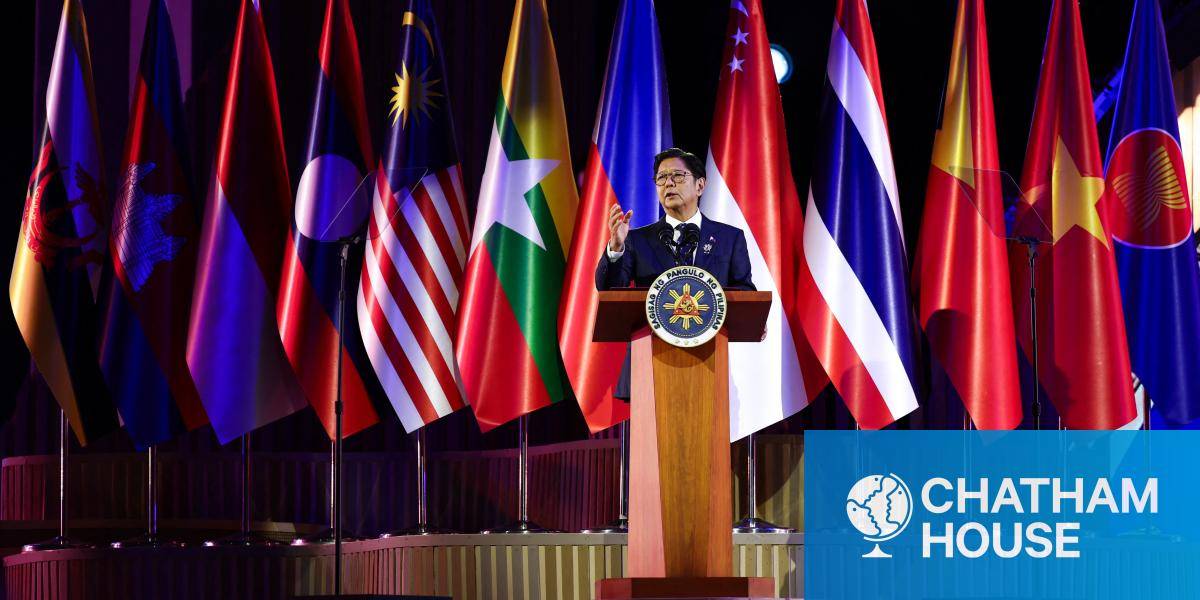
The Philippines did not deliver a South China Sea Code of Conduct. But it has shown what ASEAN can achieve Expert comment jon.wallace 17 November 2026 This week’s summit did not produce the Code many desire. But as ASEAN Chair Manila has laid a useful foundation for the Code, while making important progress on regional connectivity. When it assumed the Chair of ASEAN last year, the Philippines placed negotiations to establish a South China Sea Code of Conduct (COC) at the centre of its agenda. An agreement has been desired for decades, to help reduce territorial and other tensions between China and regional countries. The need for the COC is clear: Philippine ships have continued to clash with Chinese Coast Guard vessels throughout the year, around disputed areas such as Scarborough Shoal. But Philippines Foreign Affairs Secretary Theresa Lazaro cooled expectations of an agreement at this week’s ASEAN summit. In a recent statement, she said that while around 80 per cent of the provisions are agreed, ‘sticking points’ still remain. It is therefore unlikely to be concluded by the end of the year with Philippines as ASEAN Chair. But the Philippines tenure has been about more than just the COC. In a region of diverging priorities, security alignments, and threat perceptions, Manila should be judged by how far it has boosted ASEAN’s utility as an independent diplomatic actor able to strengthen regional solidarity. Progress under pressure The role of ASEAN Chair was clearly going to test the Philippines: How would it reconcile its national security interests with its responsibilities as the leader of a forum for regional cooperation? And would Beijing see Manila as a good faith actor on the COC? The Philippines is, after all, one of the oldest treaty partners of the US. Those ties are getting stronger under President Ferdinand ‘Bongbong’ Marcos, while its relationship with China becomes ever more fractious – a stance not shared by all ASEAN partners. Beside these obvious
In 2026, Germany is spending a record €125 billion on defense, second only to the United States among NATO allies, and its core defense budget is set to reach €170 billion by 2029. Its military strategy promises Europe’s strongest conventional army by 2039 with a technologically superior and innovative Bundeswehr, Germany’s armed forces.German startups and “neo-primes” — venture-backed defense companies built to compete with established primes — demonstrate, most visibly in Ukraine, that money can become capability quickly and cheaply. Much of that proof is paid for by Berlin: Germany is Ukraine’s second-largest bilateral donor and finances the drones that The post Spending Isn’t Deterrence: Fixing Germany’s Procurement Machine appeared first on War on the Rocks .
When U.S. President Donald Trump lands in Shenzhen later this week for the Asia-Pacific Economic Cooperation summit, he will sit down with Chinese leader Xi Jinping for the fourth time amid an unexpected détente between Washington and Beijing. The trade war of 2025 is in abeyance, the two governments have announced a relationship of “constructive strategic stability,” and, to the alarm of American allies, Trump and Xi are planning to meet with Russian President Vladimir Putin. Beneath the surface, however, the détente is beginning to crack.
In June 1993, a group of Second Artillery Corps senior leaders gathered at the Jiuquan Satellite Launch Center. The organizers brought Li Xuge, recently retired commander of the Second Artillery, as a special guest for the event. Li had watched the Second Artillery develop from its infancy to this day, when China finally tested a ballistic missile capable of striking anywhere within the United States. However, Li had received significant pushback on the program in the years prior to this launch. In the early 1990s, China’s military strategy was shifting to focus on war with Taiwan. In that environment, senior The post The Military Strategic Drivers Behind China’s Nuclear Expansion appeared first on War on the Rocks .
Europe is spending more on defence than ever, but real capability is built after the equipment arrives. Hungary's experience shows what the hard part involves.
Welcome to The Ukraine Compass, a weekly digest of Ukrainian commentary and analysis from across the political spectrum, only for War on the Rocks members. Each week, we bring you a curated selection of articles from Ukrainian media offering insight into how Ukrainians themselves debate the issues shaping their country.Western coverage often narrows the view to the battlefield — these pieces widen it, revealing the texture of daily life, politics, and public argument in a nation at war. The perspectives gathered here are varied, candid, and often surprising, together forming a more complete picture of Ukraine as it really is.Frontline The post Theater in Abu Dhabi, Everyday Life at Home: Why the War Still Shapes Every Story appeared first on War on the Rocks .
Taiwan faces mounting questions about its ability to defend itself, a bitter fight over defense spending, and uncertainty about Washington’s commitment to its security. Michael Hunzeker (George Mason University), Amanda Hsiao (RAND), and Peter Mattis (Jamestown Foundation) join Ryan to examine whether Taiwan is preparing fast enough for a possible war, what’s holding up a major U.S. arms package, and whether warmer relations between Washington and Beijing could come at Taipei’s expense. They also turn to Taiwan’s Nov. 28 local elections, where the results could shake up the island’s political landscape and spell trouble for the KMT ahead of the The post Taiwan’s Political and Security Future appeared first on War on the Rocks .