Russia's missile production vastly outpaces the output of interceptors for Ukraine and by the United States—an issue that should concern militaries around the world. The post Dispatch from Kyiv: Let Ukraine strike Russia’s missile launchers at the source appeared first on Atlantic Council .
A recent Atlantic Council roundtable brought together Italian policymakers, international experts, and analysts to examine interconnected security dynamics across North Africa, the Sahel, and the Red Sea. The post Upheaval in the Greater North African Security Complex demands a new transatlantic policy approach appeared first on Atlantic Council .
The dominance of the U.S. dollar is a crucial source of American global power. The dollar’s widespread use, strength, and reliability provide major economic advantages for the United States, enable U.S. sanctions to have real bite, and significantly boost U.S. influence abroad. For America’s adversaries — as well as for many other countries that view Washington with some skepticism — dependence on the dollar comes with significant risks. Over the years, various proposals to develop rival alternatives have failed, demonstrating the depth of global reliance on the dollar. Nonetheless, efforts to develop other options have continued, potentially enabled by technological The post Is Dollar Dominance in Decline? appeared first on War on the Rocks .
Read the full article here The post Lichfield cited in a The Diplomatic Insight article on Trump’s Russian diesel deal and congressional opposition appeared first on Atlantic Council .
Read the full article here The post Lichfield quoted in CNN on the impact of the Russian sanctions waiver on US importers appeared first on Atlantic Council .
For this edition of The Atlantic Brief, the Royal United Services Institute and War on the Rocks present a dialogue on the future of trans-Atlantic defense cooperation following the U.S. midterm elections. Participating experts from the United Kingdom, continental Europe, and the United States bring decades of first-hand experience in the armed forces, diplomacy, and foreign policy.The panel will explore what the midterms mean for U.S. force posture, NATO, and support for Ukraine. It will also cover European investment in defense capabilities, the questions of strained supply chains, and whether NATO or the European Union should lead in countering Russian The post The Atlantic Brief: After the U.S. Midterms, Trans-Atlantic Defense Cooperation appeared first on War on the Rocks .
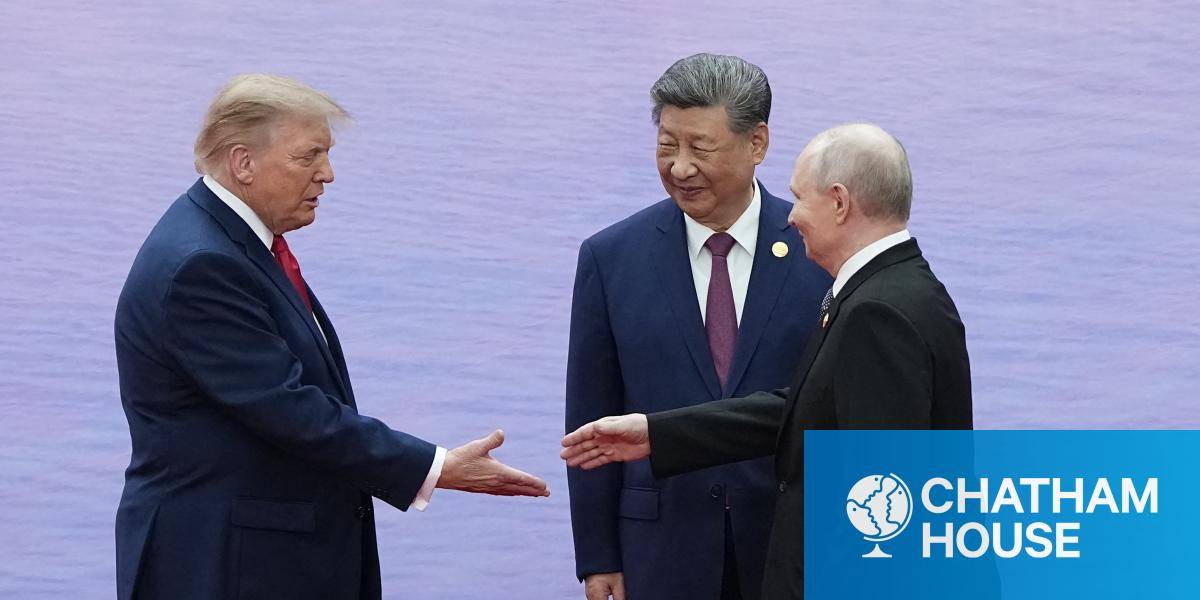
Yalta this is not: The Xi–Trump–Putin meeting is China’s show and America’s loss Expert comment jon.wallace 18 November 2026 The meeting offers little for US interests, risk for Ukraine – and a sobering image for Europe and other countries. President Xi Jinping, President Donald Trump and President Vladimir Putin might be tempted to accept the comparisons being drawn between their coming talks in Shenzhen on Thursday and the Yalta summit of 1945. There, US President Franklin Delano Roosevelt, UK Prime Minister Winston Churchill and Soviet Premier Joseph Stalin set out the post-war peace, carving up the world between them – though the end of the British Empire was already inevitable. But this week’s meeting is no Yalta. It is showmanship. Any deals to be done are small – and they are all in China’s favour, unless Trump decides to side with Russia over Ukraine. For the rest of the world, particularly the UK and European Union, the display is a reminder of the urgent need to shore up regional alliances, the United Nations, and the rule of international law where possible. The players Trump has most to lose from going to this summit. The US would have been better off had he not gone. Perhaps he was attracted by the image of standing shoulder to shoulder with two authoritarian leaders he seems to admire – more than he does the leaders of the US’s democratic allies. Perhaps it was the possibility of taking part in a Yalta-like exercise in shaping the world. If that was his judgement, it is wrong. For a start, unlike the Yalta photograph of 1945 (where the three leaders were seated, concealing the fact that the ailing Roosevelt needed a wheelchair) the US president will not be placed in the centre. That role will go to Xi, as host. But that positioning will also reflect the reality. Xi is the leader of the power with the least need of concessions from the others. Besides matters of presentation, by attending this meeting Trump surrenders yet again what has been since 1945
When the US, Russian, and Chinese presidents meet on Thursday, weakness rather than strength may prove the most consequential force. The post In Shenzhen, weakened giants navigate a dangerous, disorderly world appeared first on Atlantic Council .
The 30-year-old pro-democracy activist has spent almost six years behind bars and was set for release in January 2026, until authorities charged him with conspiring to foreign collusion last year.