Alia Brahimi and Alexander Kolyandr discuss the “one-shot” mercenaries Russia employs for its shadow war in Europe. The post Mercenaries, apps, and crypto: Russia’s hybrid war on Europe appeared first on Atlantic Council .
The third Russia-Africa summit reflects Moscow’s global ambitions—coupling ideology with pragmatism beyond security partnerships. Europeans need to demonstrate that they are well-placed to back African-led projects and deliver reliable cooperation
Spain’s coming election is likely to pave the way for a PP-Vox government. While this would end Madrid’s progressive exceptionalism, the PP’s ambition to bring Spain closer to Europe’s centre-right mainstream could be complicated by its prospective coalition partner
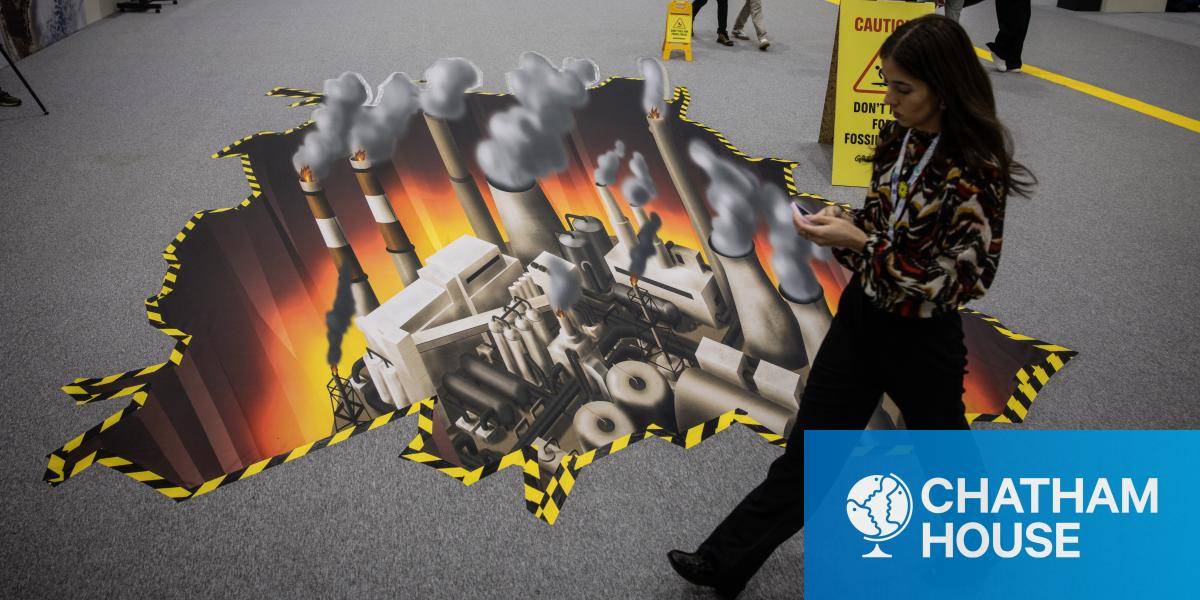
What does COP31 reveal about the geopolitics of climate change? Expert comment jon.wallace 19 November 2026 Some claim COPs take place in a bubble. But the summits say much about the interplay between climate policy, the energy transition, and the shifts underway in international relations. Today, much of the political right in developed countries rejects efforts to combat climate change. Even leaders nominally of the centre and left are deprioritizing efforts to reduce emissions. Meanwhile many corporations are dropping their net zero targets. And fossil fuel companies are scrapping or scaling back their low-carbon divisions. It might seem strange, then, that this year’s COP31 climate change conference in Turkey attracted more people than ever. A record 93,000 participants as well as 77 heads of state and governments registered to attend. A COP headcount is a crude proxy for the global salience of climate policy. Nevertheless, it is worth asking: Is COP31 taking place in a bubble that is disconnected from geopolitical realities? Or does it indicate how climate change and the energy transition are simultaneously reflecting and influencing seismic geopolitical shifts? Detached from reality? When the first COP summit took place in Bonn in 1995, the world was vastly different. Climate-fuelled disasters were still theoretical. Practical, affordable low-carbon technology was a distant dream. The United States appeared to be the world’s only superpower, its alliances assured. Want to hear more on the path to a secure energy transition? Join us at our climate and energy summit, where policymakers and industry leaders tackle the toughest questions on climate and energy security. All of this has changed. Yet many negotiating positions at COP remain frozen in time. Entrenched definitions of ‘developed’ and ‘developing’ countries shape expectations of who is responsible for providing climate finance. That is despite some of the latter group – notably the Gulf states – now bein
How should the United States and its allies prepare for a limited nuclear attack, and why? An expert tabletop exercise gaming out scenarios in which North Korea might launch such an attack offered insights. The post Toplines: Why and how the United States and its allies should prepare for a limited nuclear attack appeared first on Atlantic Council .
The Climate Briefing: The role of science in climate negotiations Audio LToremark 19 November 2026 With governments debating whether the next IPCC assessments will be ready to inform the 2028 Global Stocktake, Bhargabi speaks to UNEP’s Åsa Persson and Chatham House’s Patrick Schröder about the role of science in setting the factual foundation for global climate decision-making. Will governments have the latest science they need when the next Global Stocktake concludes in 2028? That question is at the centre of a growing debate towards the close of COP31 on timeframes for the IPCC’s next assessment cycle. While many vulnerable countries want new reports delivered in time to inform negotiations, others warn that a compressed schedule could undermine broad scientific participation. In this episode, panellists discuss the role of science in international climate governance, how scientific assessments influence decision-making under the UN climate negotiations, and why the relationship between evidence and policy remains as important as ever. To discuss this, Bhargabi welcomes Åsa Persson, UN Environment Programme’s chief scientist and director of the Office of Science, and Dr Patrick Schröder, senior research fellow at Chatham House. About The Climate Briefing The Climate Briefing explores key themes in the UN climate negotiations and international climate politics. The podcast is hosted by Bhargabi Bharadwaj from Chatham House and features interviewees from governments, international organizations, academia and civil society organizations from across the world. You can also listen to The Climate Briefing on Apple Podcasts and Spotify . Explore our other Chatham House podcasts .
President Abraham Lincoln’s brief remarks dedicating the Soldiers’ National Cemetery at Gettysburg provided a defining statement of America’s democratic ideals.
The 2027 Ukraine Recovery Conference in Tallinn is an opportunity to turn this event from a one-off series of signing ceremonies into a substantive discussion of Ukraine’s future, writes Luke Zahner. The post Estonia has a chance to reboot the Ukraine Recovery Conference appeared first on Atlantic Council .
Members’ question time: What do the Spanish elections mean at home and abroad 1 December 2026 — 17:00 TO 18:00 GMT Anonymous (not verified) 19 November 2026 Online Learn how the result of the snap election called by Prime Minister Pedro Sánchez could reshape Madrid’s domestic priorities and international role. Learn how the result of the snap election called by Prime Minister Pedro Sánchez could reshape Madrid’s domestic priorities and international role. In this members’ question time, Nic Lawley, Special Adviser to Chatham House Director Bronwen Maddox, examines the aftermath of the Spanish general election. He considers what the result means for Madrid’s domestic priorities, its role in Europe and its wider foreign policy. This event discusses: What does the result mean for Spain’s political direction and domestic priorities? What could the result mean for Spain’s role in Europe? How could Spain’s wider foreign policy change as a result of the result? What can this election teach us about the mood across Europe and what to expect from elections across the continent over the coming year? Members’ Question Time brings Chatham House members together online with our experts to explore the issues shaping international affairs. Each session provides expert analysis of a current global development and gives members the opportunity to ask questions directly. These online sessions are exclusive to Chatham House members.