Read the full article here The post Nikoladze and De Kruijf cited in Challenges on Nvidia’s pressure on Washington to preserve their access to the Chinese market appeared first on Atlantic Council .
Read the full article here The post Nikoladze and de Kruijf cited in Journal of Law & Cyber Warfare on US chips and Nvidia’s influence appeared first on Atlantic Council .
Listen to the interview here The post Nikoladze interviewed by Malaysian Business FM on the Nvidia scandal and implications for export controls appeared first on Atlantic Council .
Watch the full interview here The post Tannebaum interviewed on CNBC on the key takeaways from Trump-Xi-Putin meeting appeared first on Atlantic Council .
The soaring use of U.S. dollar stablecoins with weak asset backing is a potential source of global financial instability. The IMF should act to address the problem.
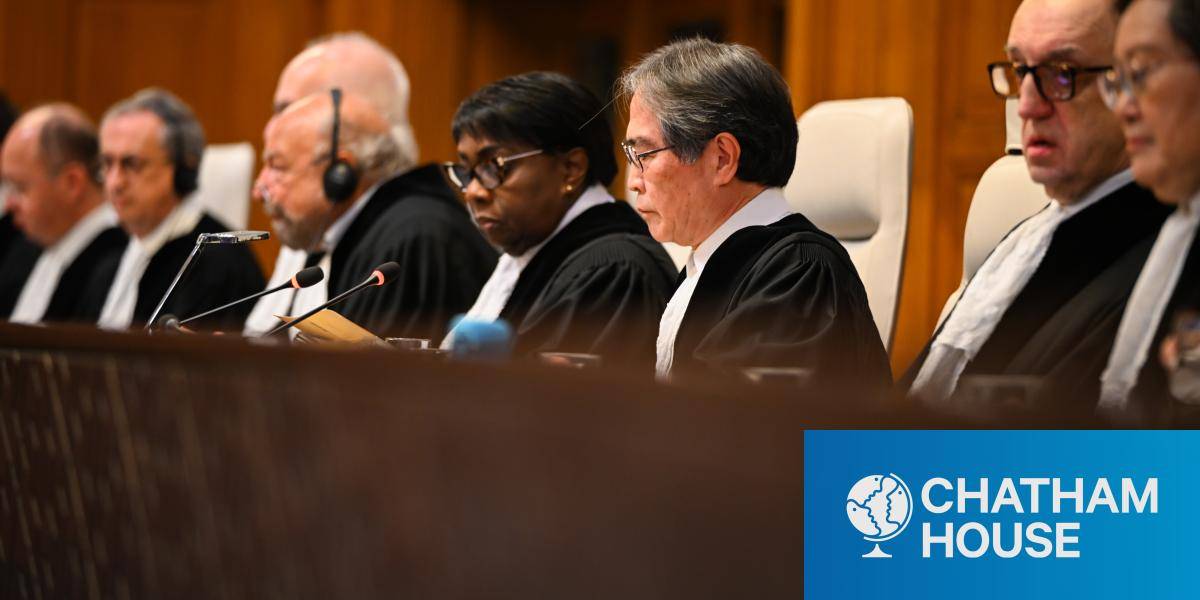
The ICJ’s Myanmar finding shifts the dial – a little – on the grounds for a guilty verdict in a genocide case Expert comment jon.wallace 20 November 2026 The Court’s unusually split decision seems to adjust how intent to destroy a group ‘in whole or in part’ is established. The International Court of Justice (ICJ), the highest court in the world, has ruled that Myanmar is guilty of genocide. According to the Court, the ‘clearance’ campaign by the Myanmar military against its Rohingya minority of 2017 was aimed at the destruction, in whole or in part, of that community. The finding in this case, which was brought before the Court by the Gambia in 2019, will reverberate far beyond Myanmar and its immediate environment. The ICJ’s previous genocide cases The Rohingya are a mainly Muslim ethnic group that has been excluded from Myanmar citizenship and discriminated against for decades. In the wake of attacks by terrorist groups against the military in 2016, some 10,000 Rohingya were killed , and over 85 per cent of its population of around 850,000 were displaced from Myanmar over the following year in a campaign of killings, rape and the burning of villages. Hear directly from the experts Get nuanced insights from Chatham House experts on the issues shaping the global policy and geopolitical landscape. The ICJ has established a very high bar for confirming that genocide has occurred. Several cases, including those brought by Croatia against Serbia and Sudan against the UAE, have been unsuccessful. Others are still ongoing, addressing the Democratic Republic of the Congo (DRC) and Rwanda, Ukraine and the Russian Federation, and Gaza. Only once before, in relation to the 1995 Srebrenica massacre of 8,000 men and boys in Bosnia and Herzegovina, has the ICJ confirmed genocide. But controversially, it failed to attribute the atrocity to its alleged author, the Republic of Serbia (then the Federal Republic of Yugoslavia) under Slobodan Milosevic. This new decision of the Court
The resilience gap: Are Europe’s societies ready for the next crisis? Audio sseth.drupal@c… 20 November 2026 In this week’s episode of Independent Thinking, our experts discuss how prepared Europe’s leaders, economies and societies are for disaster, confrontation and conflict. From hacked refrigerators and arson attacks to drone incursions on airfields, a wave of low-level sabotage and digital disruption has focused minds across Europe on the question of resilient societies. Are European countries sufficiently prepared for covert action by hostile states and their proxies? Can citizens’ trust in government and information be improved? And how does a ‘whole of society’ approach to resilience relate to military rearmament? To discuss this, Bronwen Maddox is joined by General Sir Richard Barrons, former Commander at UK Joint Forces Command; Isabella Wilkinson, senior research fellow in Chatham House’s Digital Society Programme; and Grégoire Roos, director of our Europe and Russia and Eurasia Programmes. About Independent Thinking Independent Thinking is a weekly international affairs podcast hosted by our director Bronwen Maddox, in conversation with leading policymakers, journalists and Chatham House experts providing insight on the latest international issues. More ways to listen: Apple Podcasts and Spotify . Explore our other Chatham House podcasts .