The Three Crises Congress Needs to Confront
The incoming Democratic Congress will not be able to solve the affordability crisis without addressing three major foreign policy threats.
It makes sense for European leaders to have a seat at the negotiating table. But tying talks to questions of broader European security creates its own risks.
US Soccer President Cindy Parlow Cone joins Frederick Kempe to discuss her vision for growing the sport following the 2026 FIFA World Cup, including an ambitious goal to bring soccer to every US school by 2032. The post US Soccer President Cindy Parlow Cone on equal pay for athletes and soccer’s future in the US appeared first on Atlantic Council .

For the nations that started this, the stakes are not abstract. They are asking the world to build infrastructure to prosecute and prevent harm that is already happening to them.
Four years into Russia’s war against Ukraine, what should the U.S. military have learned by now? Michael Kofman (Carnegie Endowment), Dara Massicot (Carnegie Endowment), and Amos Fox (Arizona State University) join Ryan to discuss. The easy answer is drones and AI, but our guests argue the harder truths lie elsewhere: “Old-fashioned” ideas like campaigning, holding territory, mass, and attrition still decide wars. And, as they discuss, based on U.S. performance in the war with Iran, it may be that not much learning has happened at all.Image: ArmyInform The post What Ukraine Hath Wrought: Lessons for War, If We’re Listening appeared first on War on the Rocks .
CFR President Michael Froman reflects on a recent CFR fact-finding mission in Ethiopia and Kenya.
Jessica Hendrick welcomes Milica Delević and Vladimir Petrović to discuss the landslide election that stunned Serbia
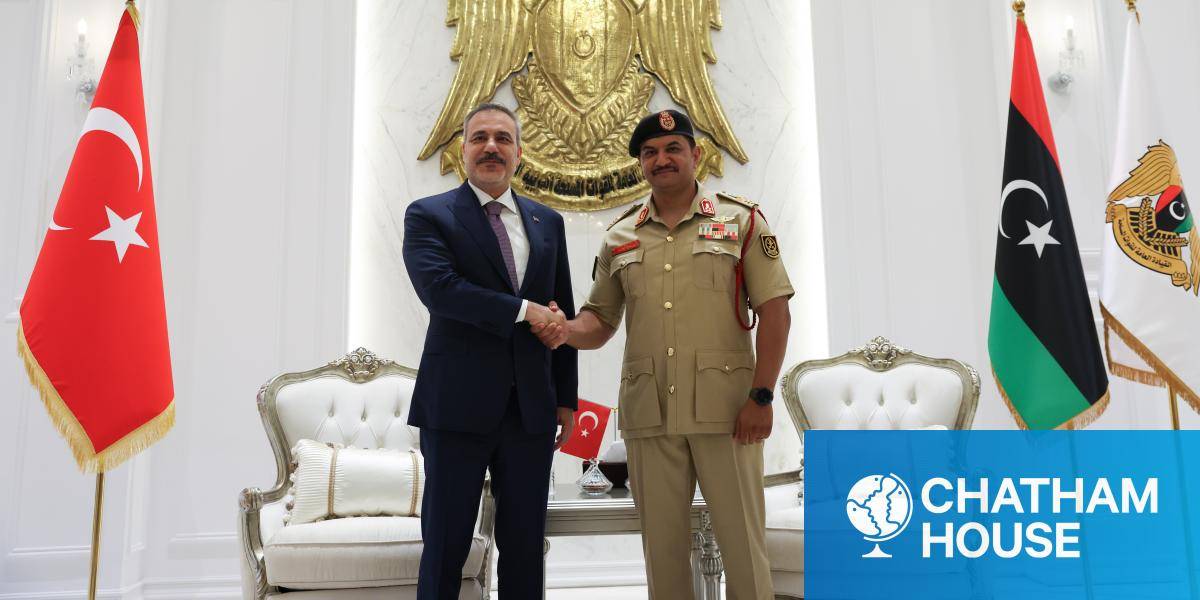
Will Saddam Haftar be Libya’s next president? Expert comment thilton.drupal 20 November 2026 The son of commander Khalifa Haftar has consolidated his position as heir apparent and expanded his influence. But his pursuit of the presidency could bring Libya back into conflict. Saddam Haftar, the son of the Libyan Arab Armed Forces (LAAF) commander Khalifa Haftar, has recently visited several foreign capitals in an apparent attempt to boost his international standing. This has been seen as part of a concerted push to become Libya’s next president. This effort will define Libya’s politics for the coming months. It has huge implications for the country’s political future amid a US-led push for a national government that would unify Libya’s two rival administrations: the LAAF-controlled administration in eastern Libya and the Government of National Unity (GNU) in Tripoli. Strong opposition to Saddam’s goals in western Libya also means that the risk of conflict is increasing. Saddam becomes heir apparent For many years, there have been questions over Khalifa Haftar’s succession. The assumption has been that Haftar, 83, would remain in direct control of the LAAF while alive. It was speculated that the LAAF could fragment without Haftar, given the LAAF’s status as a hybrid of a military institution and a family enterprise. However, in recent years, Haftar has increasingly taken a back seat as his sons Saddam, Khaled, Belgassim and al-Sadiq have come to the fore. Their rise became clearer after the failure of the LAAF to capture Tripoli in 2020, which led Haftar to reassess his approach. Over subsequent years, the LAAF was restructured. Its forces were placed under the command of Saddam and Khaled, who gained responsibility for land forces and security units respectively. Saddam has become the most powerful of the sons. Meanwhile, Belgassim developed strong networks and influence in political circles. He was instrumental in the formation of a new government that sought to rep
Italy is lagging in Europe when it comes to handling hybrid threats. Here is what it should do
Read the full paper here The post Chhangani cited in IMF Policy Paper on the shift of CBDC projects towards wholesale applications appeared first on Atlantic Council .